

How can societies turn diversity into a source of strength?
Nov 2026
Interview by Maura Wyler
I would not be able to point to one particular moment, rather it was the result of a steady process of questioning the world around me and looking for answers. As a teenager, I would read the newspaper and try to make sense of what I found there, whether it was inequality, economic crises, conflicts, or political events; it all seemed so intricate, yet utterly fascinating. A turning point definitely came during my undergraduate studies, when I realized that human behavior and social phenomena more broadly could be studied using a scientific method, just as we do with nature. Learning to study causal relationships gave me the structure I had been unconsciously looking for to make sense of the world, and it changed the way I approached problems. Once I began applying those tools to the questions that had been bugging me, research felt like the most natural pathway forward.
Rather than an economic mystery, I would focus on a key economic challenge for the decades ahead: how to manage the growing social and cultural diversity that many countries in Europe and North America are experiencing, as immigration grows due to globalization, conflict, and climate change. Diversity can bring economic benefits, but it also raises difficult questions about integration, social trust, and public support for the welfare state, and these questions are increasingly shaping the political debate.
Economic research has a fundamental role to play here, as it can provide the evidence for policymakers to understand both how to capture the benefits of these population trends and how to contain the divides that can open up between social groups.
My own work speaks to this role of research by assessing a policy that is currently being frequently advocated: mass deportation. I study the deportations of Mexicans from the United States in the 1930s and document their lasting negative effects on the immigrant communities left behind. The better we understand what different policies do to communities, the better placed societies will be to turn diversity into a source of strength rather than division.
I hope my work makes two main contributions. Academically, I want to draw on insights from the past and combine them with cutting-edge methods to tackle pressing social questions. I hope my work will not only provide empirical answers but also raise new questions within the scientific community, contributing to academic debate. Beyond academia, I want to bring evidence into debates on immigration and integration, which are too often driven by anecdote and assumption, and I see communicating findings to policymakers and the broader public as a central part of the job. The UBS Center Scholarship will help me achieve both goals, through its material support and through a community that reaches well beyond academia.
Zurich is a great place to do research, combining a growing, interdisciplinary scientific community with a stimulating city environment. The Department of Economics at UZH brings together outstanding academics and students in a friendly environment, with plenty of opportunities to learn and to receive feedback on our work. You can clearly tell that everyone is motivated to bring out the best in us PhD students. The department has also grown rapidly in recent years, and Zurich is increasingly becoming a major hub for economics research in Europe.
On a personal level, Zurich is a culturally rich city set in a landscape that is hard to match. There is plenty to enjoy, from festivals to cafes, all alongside a peaceful natural setting. Once you live here, you discover that a walk by the lake is often all it takes to recharge.
The main challenge in a PhD, and in research more generally, is that it takes a great deal of intrinsic motivation. Producing high-quality, novel research takes a lot of effort, with plenty of dead ends, unexpected setbacks, sudden changes of plan and new beginnings. I have found that the key to navigating these obstacles is to be genuinely passionate about the questions you study, so that every piece of feedback and every mistake becomes a chance to learn something new and stay intellectually stimulated.
Interview by Maura Wyler
I would not be able to point to one particular moment, rather it was the result of a steady process of questioning the world around me and looking for answers. As a teenager, I would read the newspaper and try to make sense of what I found there, whether it was inequality, economic crises, conflicts, or political events; it all seemed so intricate, yet utterly fascinating. A turning point definitely came during my undergraduate studies, when I realized that human behavior and social phenomena more broadly could be studied using a scientific method, just as we do with nature. Learning to study causal relationships gave me the structure I had been unconsciously looking for to make sense of the world, and it changed the way I approached problems. Once I began applying those tools to the questions that had been bugging me, research felt like the most natural pathway forward.
The UBS Center Scholarships are scholarships awarded every year to outstanding PhD students at the Zurich Graduate School of Economics, run by the Department of Economics at the University of Zurich. Furthermore, by funding new endowed chairs at the Department of Economics, the UBS Center will create additional doctoral positions for talented young researchers beyond the scholarship scheme. This will ensure that the Zurich Graduate School of Economics achieves a critical mass of top young talent to create a leading international graduate school with an attractive research environment. By strengthening the University of Zurich’s position as a destination for young academic talent around the world, the UBS Center also aims to further enhance Switzerland’s position as a top location for education and business more generally. After all, investment in higher education and research is a key factor in preserving and further growing economic prosperity in developed economies over the long term.
The UBS Center Scholarships are scholarships awarded every year to outstanding PhD students at the Zurich Graduate School of Economics, run by the Department of Economics at the University of Zurich. Furthermore, by funding new endowed chairs at the Department of Economics, the UBS Center will create additional doctoral positions for talented young researchers beyond the scholarship scheme. This will ensure that the Zurich Graduate School of Economics achieves a critical mass of top young talent to create a leading international graduate school with an attractive research environment. By strengthening the University of Zurich’s position as a destination for young academic talent around the world, the UBS Center also aims to further enhance Switzerland’s position as a top location for education and business more generally. After all, investment in higher education and research is a key factor in preserving and further growing economic prosperity in developed economies over the long term.
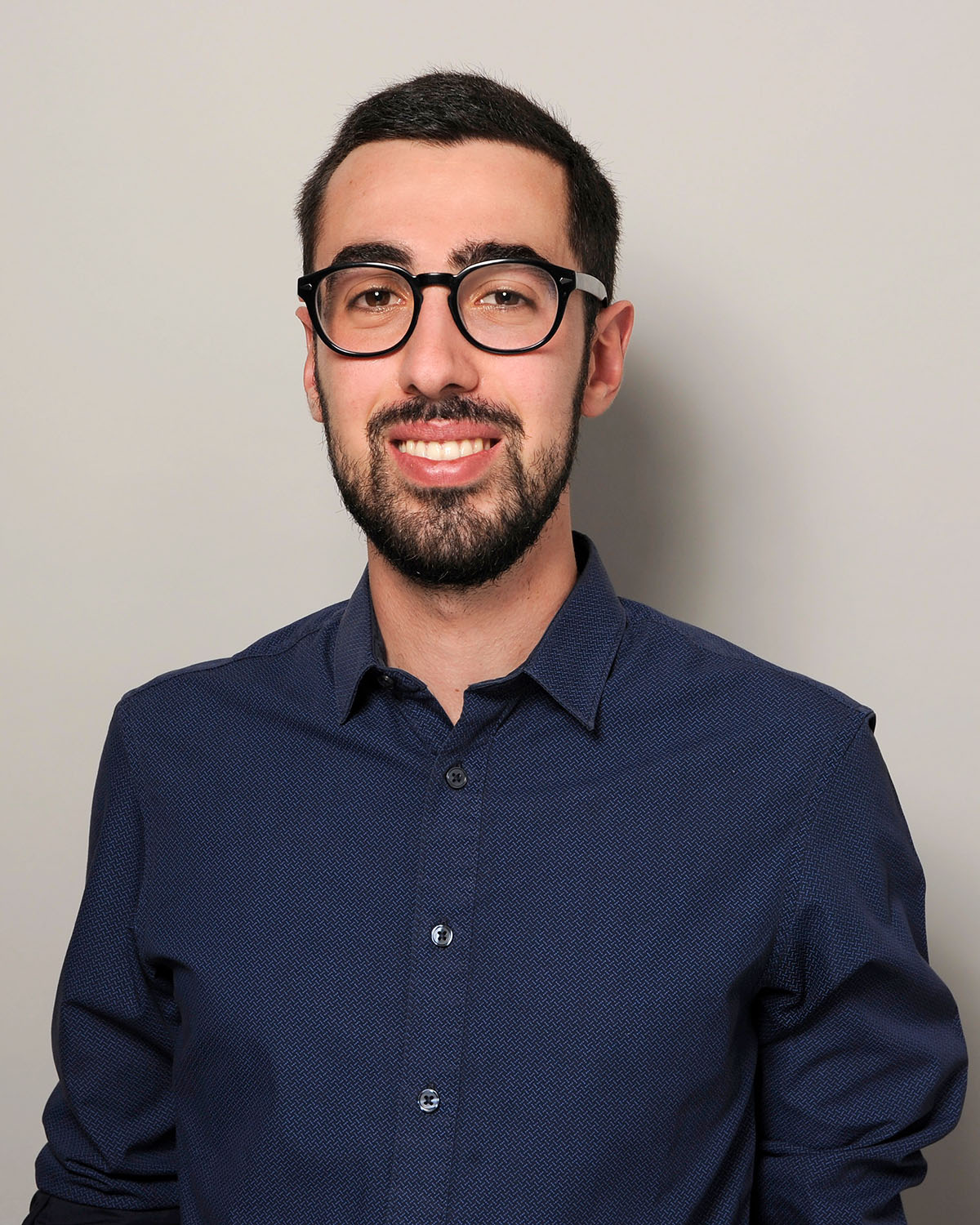
Angelo Azzolini was born in Reggio Emilia, Italy. He holds a bachelor’s degree in Economics and Finance and a master’s degree in Economic and Social Sciences from Bocconi University in Milan. After a year as a research assistant at Bocconi University and Harvard Business School, he joined the Graduate Program in Economics at the University of Zurich. He works in labor economics, economic history, and political economy, focusing on racial and ethnic inequality. His research uses episodes from modern history, from mass deportations of Mexicans in the 1930s to the schooling of Black children after the American Civil War, to provide evidence for contemporary debates on immigration, discrimination, and social diversity. To do so, he combines data from a wide range of sources, from administrative records to historical texts, with rigorous empirical methods.
Angelo Azzolini was born in Reggio Emilia, Italy. He holds a bachelor’s degree in Economics and Finance and a master’s degree in Economic and Social Sciences from Bocconi University in Milan. After a year as a research assistant at Bocconi University and Harvard Business School, he joined the Graduate Program in Economics at the University of Zurich. He works in labor economics, economic history, and political economy, focusing on racial and ethnic inequality. His research uses episodes from modern history, from mass deportations of Mexicans in the 1930s to the schooling of Black children after the American Civil War, to provide evidence for contemporary debates on immigration, discrimination, and social diversity. To do so, he combines data from a wide range of sources, from administrative records to historical texts, with rigorous empirical methods.