

The multilateral trading system: resilience, erosion, and the role of middle powers
May 2026
by Ralph Ossa
The multilateral trading system is widely seen as being in crisis. Trade policy has become more confrontational, geopolitical considerations increasingly override economic ones, and confidence in multilateral cooperation has weakened. As a result, the system built around the World Trade Organization (WTO) is often viewed as increasingly misaligned with contemporary political realities.
This view has been shaped by a sequence of shocks that have altered the trade policy environment. The global financial crisis marked a turning point in globalization, after which trade growth slowed and became more volatile. The COVID-19 pandemic exposed the fragility of highly optimized supply chains and revived the strategic salience of domestic production. Russia’s invasion of Ukraine highlighted the risks of asymmetric dependence, as Europe’s reliance on Russian energy translated rapidly into macroeconomic stress. More recently, trade policy itself has been used explicitly as an instrument of geopolitical pressure, with the United States deploying tariff threats and market access to pursue non-trade objectives, and China leveraging its dominance in strategic minerals and processing capacity.
This paper argues that the crisis narrative that has emerged from these developments is both too pessimistic and too imprecise. The multilateral trading system is under real strain, but it continues to structure most global trade and to deliver significant economic and political value. At the same time, its capacity to negotiate, implement, and adjudicate trade policy has weakened significantly. Assessing the future of the system therefore requires moving beyond broad claims of decline and focusing on three more specific questions: how far multilateral cooperation has actually receded in practice; where, precisely, the system has fallen short of its potential; and, if cooperation is under strain, who has both the incentive and the capacity to sustain it going forward?
The paper makes three main points. First, the multilateral trading system is more resilient than is often assumed. Despite rising geopolitical tensions and more unilateral trade policies, most global trade continues to take place under multilateral rules, with the bulk of merchandise trade still conducted on a most-favored-nation basis within the WTO framework. Second, this resilience masks growing weaknesses. Core functions – negotiation, implementation, and dispute settlement – have not kept pace with changes in the global economy or with tighter political constraints, leaving gaps in rule coverage, rising uncertainty, and a reduced capacity to discipline trade conflict. Third, the system can no longer rely primarily on great powers to underwrite cooperation. If multilateral trade rules are to be sustained and renewed, this will increasingly depend on collective action by middle powers with strong stakes in predictability, restraint, and rules-based cooperation.
This paper is written with a policy audience in mind. It draws on my reading of the academic literature on trade policy, as well as on my experience as Chief Economist of the World Trade Organization. To maintain focus on diagnosis and policy implications, it does not provide the detailed citations and qualifications that would be expected in an academic article. Two sources have been particularly influential in shaping the analysis: Robert W. Staiger’s recent book A World Trading System for the Twenty-First Century, which offers a unifying economic perspective on the logic and institutional design of the multilateral trading system; and the WTO’s Tariff & Trade Data platform and related datasets available through data.wto.org, which inform the empirical assessments throughout the paper.
The paper proceeds as follows. It first introduces the current state of the multilateral trading system, focusing on recent shifts in trade policy and the extent to which multilateral rules continue to structure global trade. It then develops the economic logic of the system, explaining why trade agreements exist and why the institutional design of the GATT/WTO proved effective for an extended period. Next, it assesses what the system has delivered over the past three decades, highlighting its contributions to growth, convergence, structural change, and resilience. It then examines why the system is under strain today, identifying the main fault lines that have emerged as integration has deepened and policy objectives have broadened. Finally, the paper turns to reform, focusing first on how WTO rules could be adapted to new economic and political realities, and then on how WTO processes could be adjusted to sustain cooperation in a more contested environment.
by Ralph Ossa
The multilateral trading system is widely seen as being in crisis. Trade policy has become more confrontational, geopolitical considerations increasingly override economic ones, and confidence in multilateral cooperation has weakened. As a result, the system built around the World Trade Organization (WTO) is often viewed as increasingly misaligned with contemporary political realities.

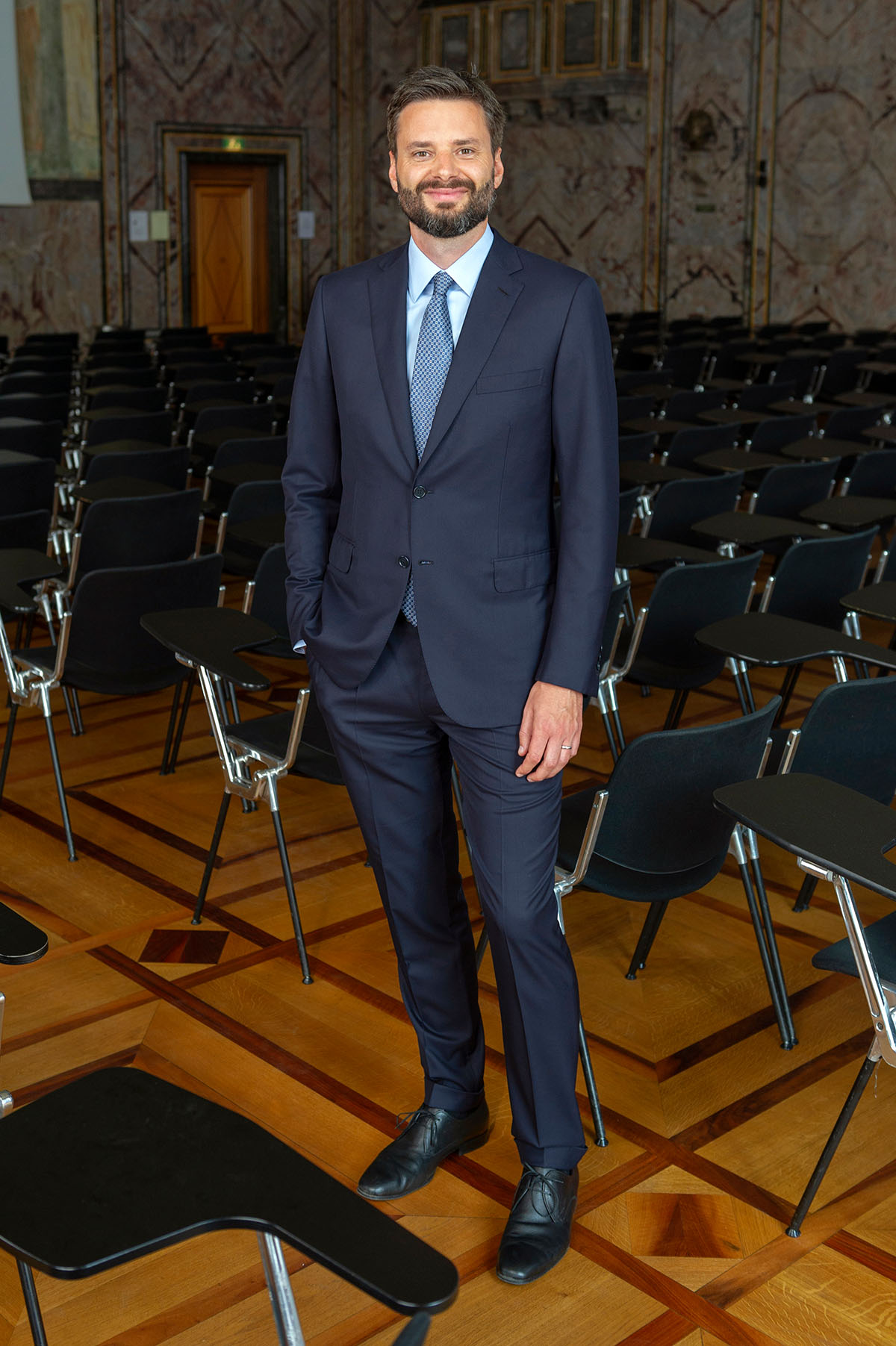
Ralph Ossa, who served as Chief Economist of the World Trade Organization (WTO) from January 2023 to June 2025, took up the UBS Foundation Professorship of Economics at the Department of Economics of the University of Zurich (UZH) as of July 1, 2025. Before joining the WTO, Ralph Ossa was already teaching and conducting research at UZH in the field of international economics, with a particular focus on policy-relevant questions. He was chairman of the Department of Economics from 2019 to 2022 and coeditor of the Journal of International Economics from 2016 to 2022. Prior to Zurich, he was on the faculty at the University of Chicago Booth School of Business. He holds a PhD in Economics from the London School of Economics.
Ralph Ossa, who served as Chief Economist of the World Trade Organization (WTO) from January 2023 to June 2025, took up the UBS Foundation Professorship of Economics at the Department of Economics of the University of Zurich (UZH) as of July 1, 2025. Before joining the WTO, Ralph Ossa was already teaching and conducting research at UZH in the field of international economics, with a particular focus on policy-relevant questions. He was chairman of the Department of Economics from 2019 to 2022 and coeditor of the Journal of International Economics from 2016 to 2022. Prior to Zurich, he was on the faculty at the University of Chicago Booth School of Business. He holds a PhD in Economics from the London School of Economics.