

A just society, fair taxes
May 2026
Direkt zu
Direkt zu
This article by Marita Fuchs was originally published by UZH News on 15.4.2026. Translated and edited for context purposes by the UBS Center.
Many people perceive income disparities to be significant and see little chance for their own social mobility. This is shown by OECD surveys. At the same time, there is growing concern about the inability to maintain one’s standard of living. In Europe in particular, many expect to be worse off later in life than their parents were. This has consequences: those who no longer believe in their own upward mobility easily lose faith in the political system. Skepticism toward politics is growing—and with it, a susceptibility to simplistic answers. Added to this are new uncertainties. Technological upheavals, especially artificial intelligence, are noticeably changing the world of work.
Against this backdrop, political scientist Silja Häusermann and economist Florian Scheuer discussed fair taxation and fair politics—and the fundamental questions of what constitutes a just society and what it takes to make society more just—at last Monday’s “Talk im Turm,” an event co-organized by UZH Alumni and UZH Communications. The discussion focused particularly on the U.S. and Switzerland. The event was moderated by UZH Magazine editors Thomas Gull and Roger Nickl.
It is undisputed that inequality in the U.S. has risen sharply. Since the 1970s, the top 1 percent of earners has doubled its share of total income to 25 percent, as economist Florian Scheuer explained. In Europe, this share is significantly lower; in Switzerland, it has remained relatively stable for years, ranging between 8 and 12 percent.
For Scheuer, the difference lies less in globalization or technological change than in institutions: the education system, tax policy, and political engagement of citizens function differently in Switzerland than in the U.S. Häusermann added that inequality is not only an economic issue but also a political one.
In Switzerland, political institutions play an important balancing role. According to Häusermann, the public education system and shared institutions create spaces for shared experiences and thus contribute to social integration. Direct democracy also acts as a corrective: social policy reforms have repeatedly been enacted at the ballot box and have reduced concrete risks—such as poverty in old age.
At the same time, a tension emerges: While many people desire greater equality, as various surveys show, concrete redistributive measures often meet with skepticism. Häusermann pointed out that complex ballot measures are frequently judged according to simple patterns: Many voters follow the recommendations of parties or the government—partly because it is often difficult to assess the consequences of tax and redistribution proposals.
This tension is particularly evident in tax policy—for example, regarding the taxation of high net worth individuals. In Switzerland, this is politically controversial: proposals for capital gains or inheritance taxes regularly fail at the ballot box.
Economist Florian Scheuer therefore advocates for pragmatic solutions. Moderate wealth taxes, such as those in Switzerland, ensure stable revenue for the state and are more likely to secure a majority politically than far-reaching reforms. With regard to the rejected Juso initiative for a 50% inheritance tax, he expressed skepticism—such proposals are hardly realistic, even from a redistribution perspective.
A look at the U.S. shows how different the situation can be: there, the tax system contributes only to a limited extent to redistribution. High-net-worth individuals often have a comparatively low effective tax burden because they frequently have no income or only a very low one. They finance their livelihoods according to the principle: “buy, borrow, die,” which means they finance their living expenses through loans secured against their stocks and other assets.
Superrich individuals like Jeff Bezos or Elon Musk therefore often have little to no traditional earned income on which they would have to pay taxes. Instead, they hold large stakes in their companies, whose value increases over time. These stakes are only taxed upon sale. In this way, they avoid a large portion of the tax burden.
At the end of the discussion, it became clear that the issue of inequality cannot be reduced to income and wealth alone. Häusermann and Scheuer emphasized once again that social institutions play a central role. Shared spaces—from schools to community life—strengthen social cohesion and have a balancing effect, even where material differences exist.
Comments from the audience picked up on this idea. Particular emphasis was placed on the unifying effect of volunteer work and, in Switzerland, traditionally also the military. Social differences, the general consensus held, do indeed persist, but such shared experiences strengthen social cohesion and the awareness of a shared responsibility.
The discussion thus made it clear: justice and (equality of) opportunity do not arise on their own. What is decisive are the political and institutional framework conditions—and the question of how much inequality a society is willing to accept.
Listen to the podcast (in German) – Gerechte Steuern, gerechte Politik
This article by Marita Fuchs was originally published by UZH News on 15.4.2026. Translated and edited for context purposes by the UBS Center.
Many people perceive income disparities to be significant and see little chance for their own social mobility. This is shown by OECD surveys. At the same time, there is growing concern about the inability to maintain one’s standard of living. In Europe in particular, many expect to be worse off later in life than their parents were. This has consequences: those who no longer believe in their own upward mobility easily lose faith in the political system. Skepticism toward politics is growing—and with it, a susceptibility to simplistic answers. Added to this are new uncertainties. Technological upheavals, especially artificial intelligence, are noticeably changing the world of work.
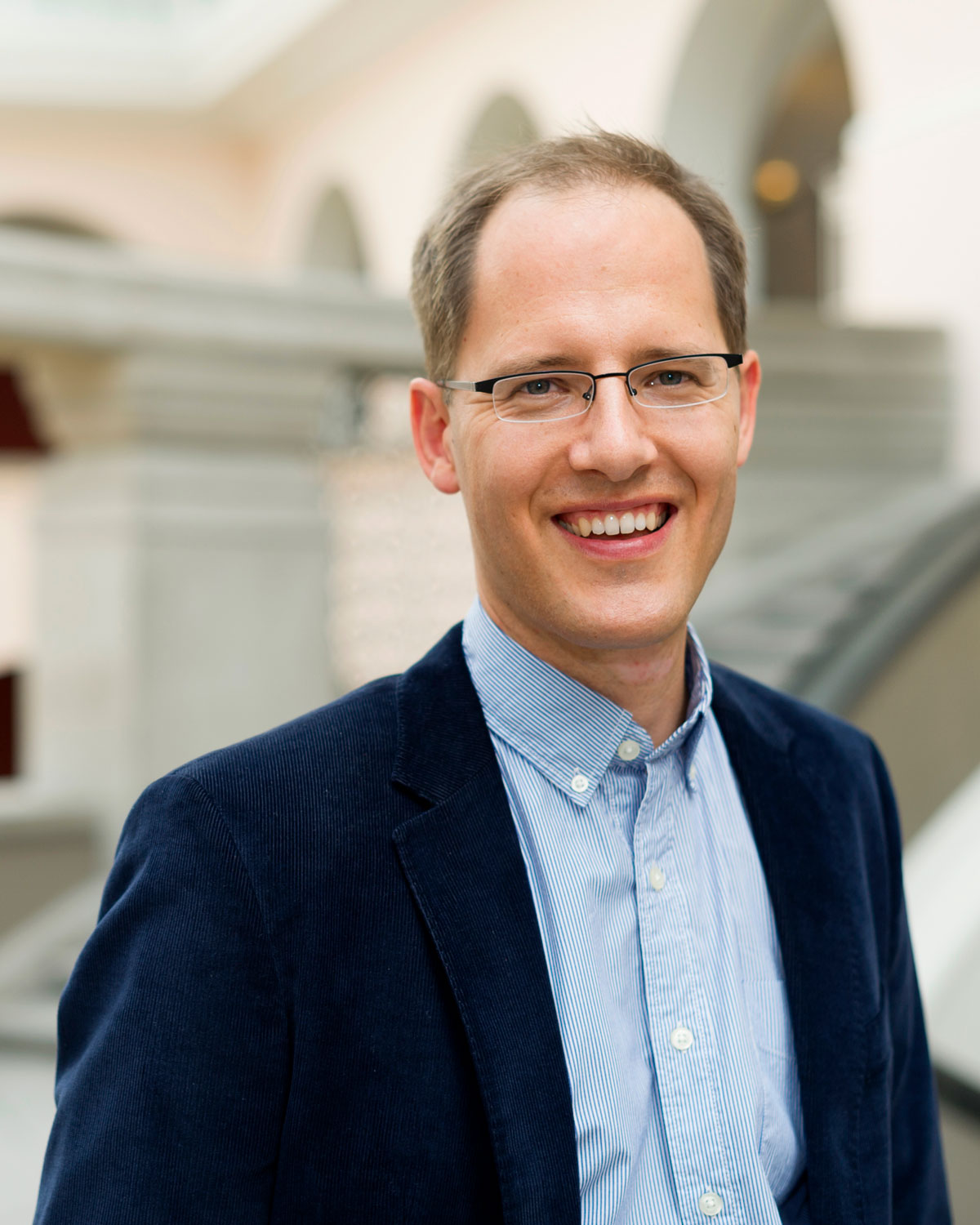


Florian Scheuer received his PhD from MIT in 2010. He is interested in the policy implications of rising inequality, with a focus on tax policy. In particular, he has worked on incorporating important features of real-world labor markets into the design of optimal income and wealth taxes. These include economies with rent-seeking, superstar effects or an important entrepreneurial sector, frictional financial markets, as well as political constraints on tax policy and the resulting inequality. His work has been published in the American Economic Review, the Journal of Political Economy, the Quarterly Journal of Economics and the Review of Economic Studies, among other journals. In 2017, he received an ERC starting grant for his research on “Inequality - Public Policy and Political Economy.” Before joining Zurich, he was on the faculty at Stanford, held visiting positions at Harvard and UC Berkeley and was a National Fellow at the Hoover Institution. He is Co-Editor of Theoretical Economics and Member of the Board of Editors of the Review of Economic Studies. He is also a Co-Director of the working group on Macro Public Finance at the NBER. He has commented on tax policy in various US and Swiss media outlets.
Florian Scheuer received his PhD from MIT in 2010. He is interested in the policy implications of rising inequality, with a focus on tax policy. In particular, he has worked on incorporating important features of real-world labor markets into the design of optimal income and wealth taxes. These include economies with rent-seeking, superstar effects or an important entrepreneurial sector, frictional financial markets, as well as political constraints on tax policy and the resulting inequality. His work has been published in the American Economic Review, the Journal of Political Economy, the Quarterly Journal of Economics and the Review of Economic Studies, among other journals. In 2017, he received an ERC starting grant for his research on “Inequality - Public Policy and Political Economy.” Before joining Zurich, he was on the faculty at Stanford, held visiting positions at Harvard and UC Berkeley and was a National Fellow at the Hoover Institution. He is Co-Editor of Theoretical Economics and Member of the Board of Editors of the Review of Economic Studies. He is also a Co-Director of the working group on Macro Public Finance at the NBER. He has commented on tax policy in various US and Swiss media outlets.