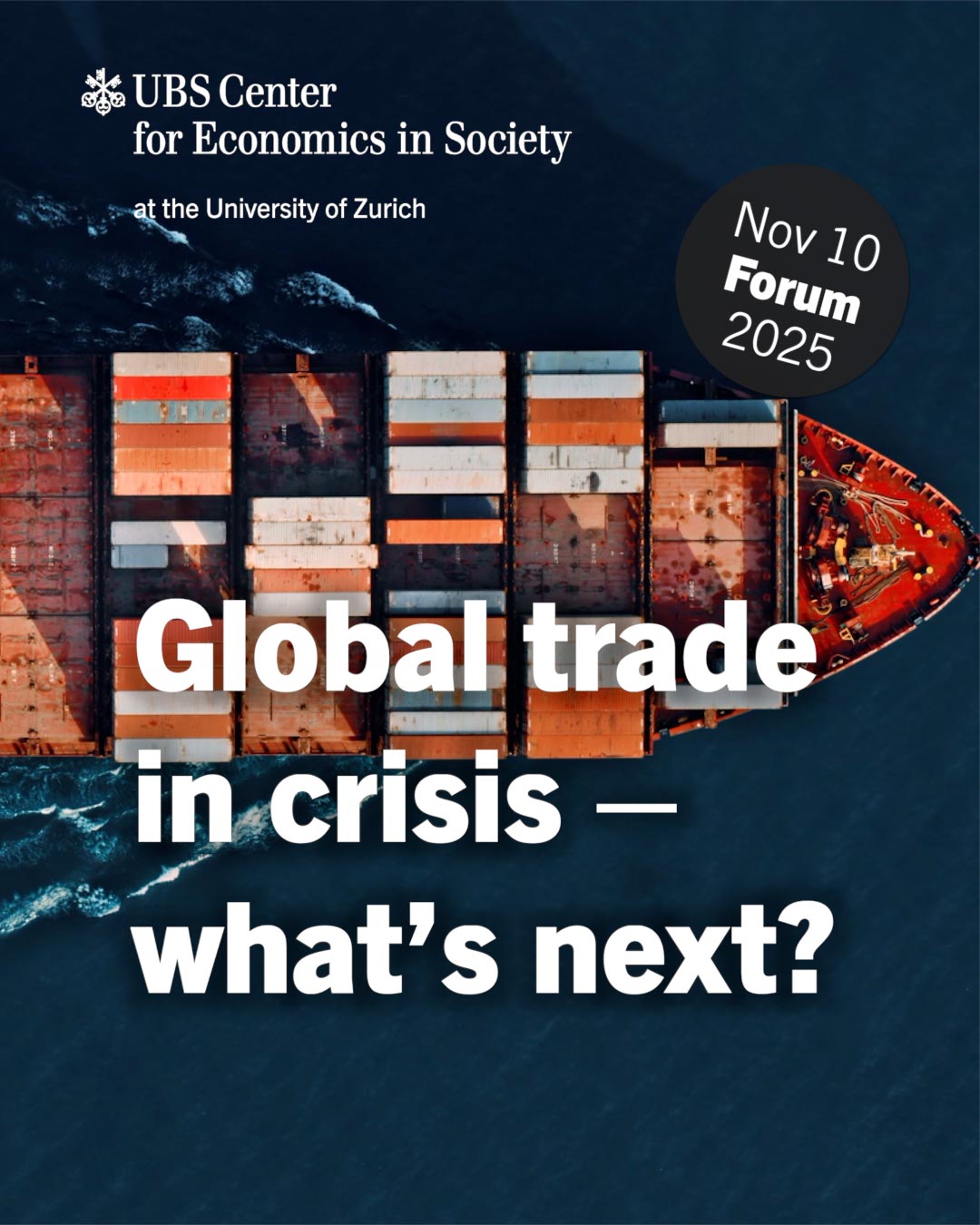

Global trade in crisis – what's next?
Nov 2025
Maura Wyler-Zerboni (Text) & Ueli Christoffel (Images)
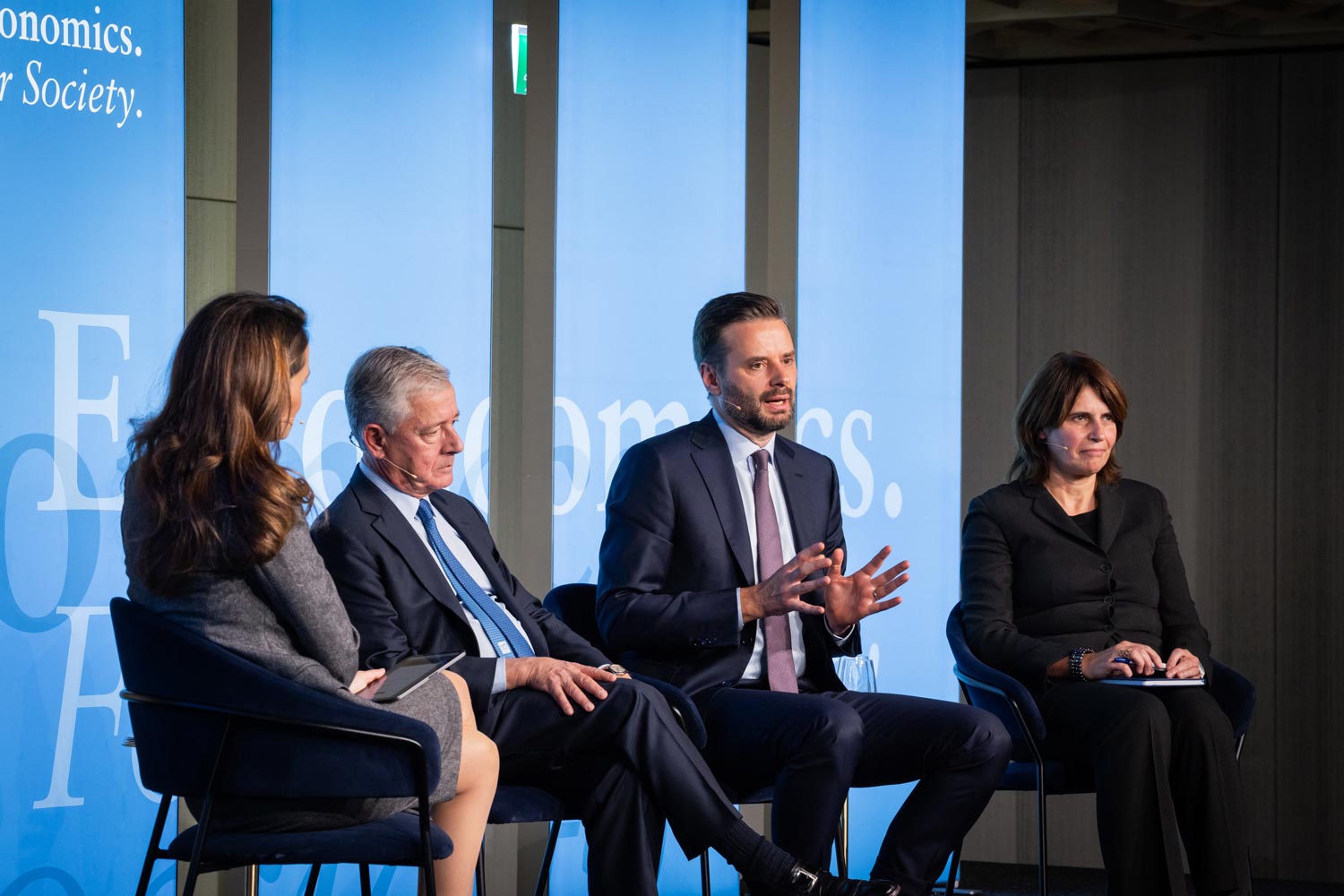
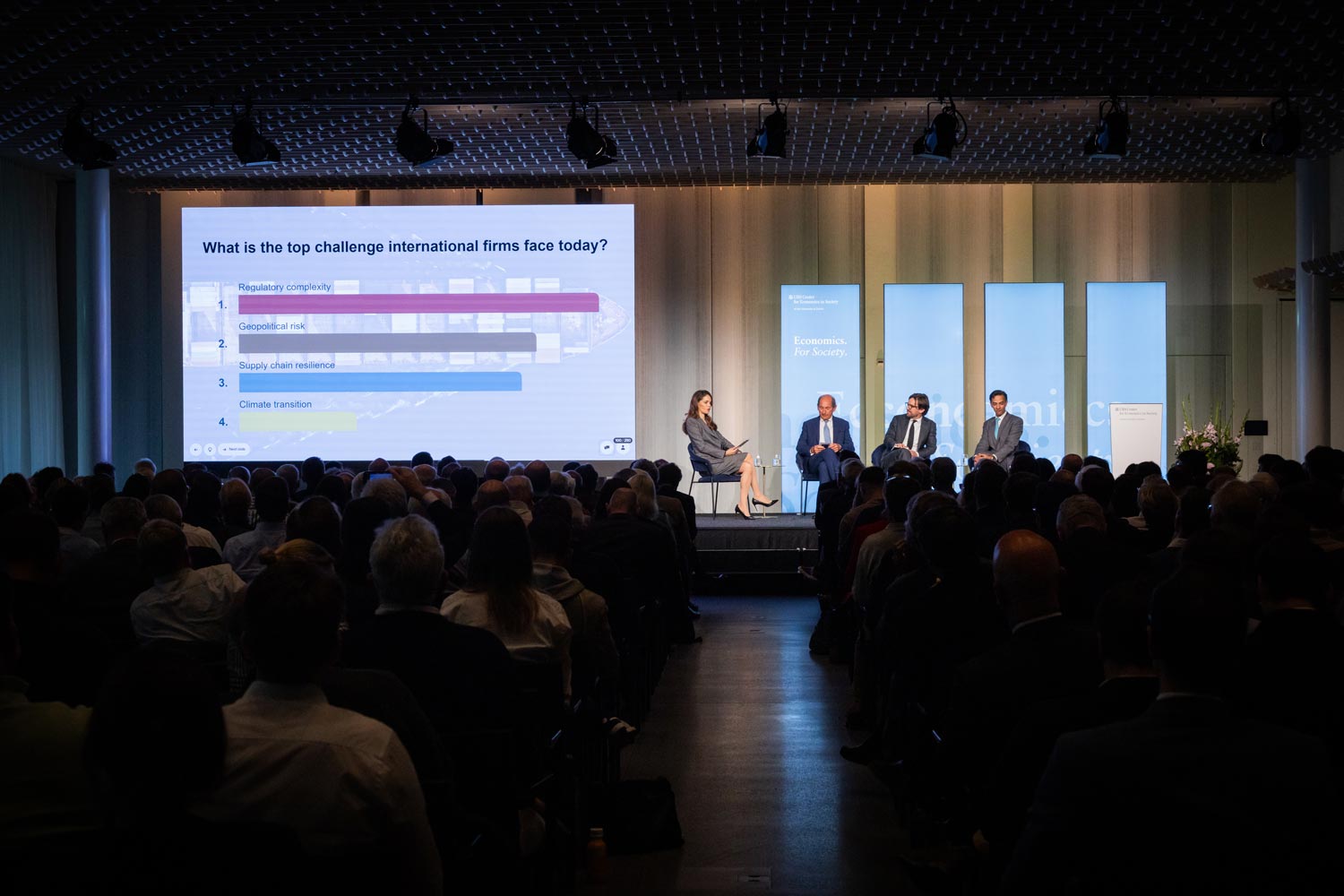
These insights emerged when prominent economists, policymakers, and business leaders came to Zurich in 2025 at the invitation of the UBS Center. Speaking at the Forum for Economic Dialogue in the fall, they offered complementary perspectives on the forces reshaping trade and on the choices facing Switzerland, Europe, and the global economy.
noted former WTO chief economist Ralph Ossa, cautioning against overstating the crisis. The U.S. tariff hikes were historically large, he acknowledged, but their global reach is limited: the U.S. accounts for just 14 percent of world imports. Declaring the rules-based order dead, he warned, risks turning narrative into reality. His outlook: more fragmentation, more uncertainty, but no collapse of global trade.
With this observation, CEPR Vice-President Hélène Rey highlighted a rare market reaction: on April 2, when new U.S. tariffs were announced, investors moved out of Treasuries and the dollar depreciated, the exact opposite of its usual safe-haven behavior. Rey showed how global trade has shifted to a tripolar system anchored in the U.S., China, and the EU. Firms are already adapting, relocating production, redesigning supply chains, and passing on higher costs.
With this deliberately sharpened summary of current U.S. tariff demands, EU Ambassador João Aguiar Machado underscored how power politics is reshaping global trade. He argued that the international trading order is undergoing its most significant restructuring since the postwar period, driven by a shift away from rules toward unilateral pressure. And while most trade still runs through WTO disciplines, he cautioned that we have not yet seen the consequences of these actions, particularly if Chinese exports begin diverting into Europe.
Barry Eichengreen, a world-leading expert on global monetary systems, financial crises, and economic history, traced the resilience of the U.S. dollar – from its postwar ascent to its survival after the collapse of Bretton Woods. Its dominant role has endured largely because alternatives remain limited. Yet gradual erosion is possible, he argued, driven not by macroeconomic weakness, but by political institutions and trust in the U.S. legal framework.
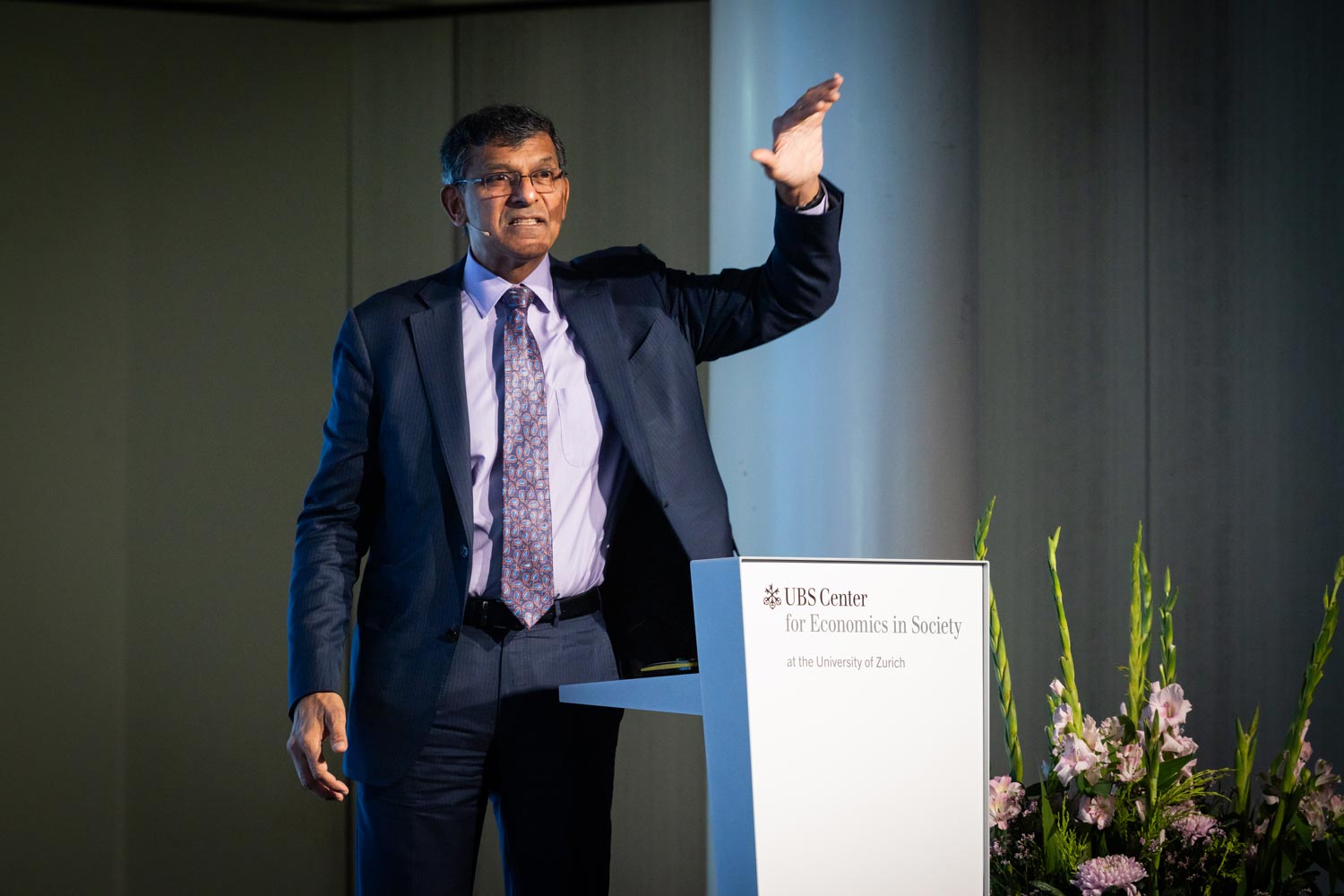
Former governor of the Reserve Bank of India Raghuram G. Rajan emphasized that trade tensions interact with domestic vulnerabilities. The rules-based order has been weakening for years, he argued, not because of trade alone, but because policymakers have failed to address the distributional effects of globalization. Political polarization, not tariffs themselves, may pose a deeper threat.
For Paul Bulcke, Honorary Chairman of Nestlé, the turbulence of global trade underscores the importance of leadership that goes beyond technical expertise. Judgment, perspective-taking, and the ability to interpret uncertainty, he argued, are becoming essential.
Rahul Sagal, CEO of the Swiss-American Chamber of Commerce, noted that according to SECO, only about 10% of Swiss exports are affected by the 39% tariffs imposed by the Trump administration. However, due to the appreciation of the Swiss franc, a Swiss company exporting to the U.S. currently faces additional costs of 50–60% compared to a U.S. competitor, a situation that is clearly unsustainable in the long run. He emphasized that Switzerland is one of the few “industrialized countries” that still truly has an industry, with 20–25% of its GDP coming from the industrial sector. His greatest concern is that, if current trends continue, Switzerland could eventually become just another average industrialized nation focused primarily on services.
Despite clear risks, several speakers highlighted opportunities. Europe could strengthen its geopolitical weight by completing the Capital Markets Union. Switzerland retains substantial advantages: strong institutions, stability, innovation capacity, and an economic model built on openness rather than protectionism.
Taken together, the voices that gathered in Zurich draw a coherent picture: globalization is not ending, but changing shape. Trade networks are being rewired, alliances recalibrated, and power redistributed. For Switzerland and Europe, the task is to remain open, agile, and grounded in the institutional strengths that have long supported their prosperity.
Maura Wyler-Zerboni (Text) & Ueli Christoffel (Images)
These insights emerged when prominent economists, policymakers, and business leaders came to Zurich in 2025 at the invitation of the UBS Center. Speaking at the Forum for Economic Dialogue in the fall, they offered complementary perspectives on the forces reshaping trade and on the choices facing Switzerland, Europe, and the global economy.
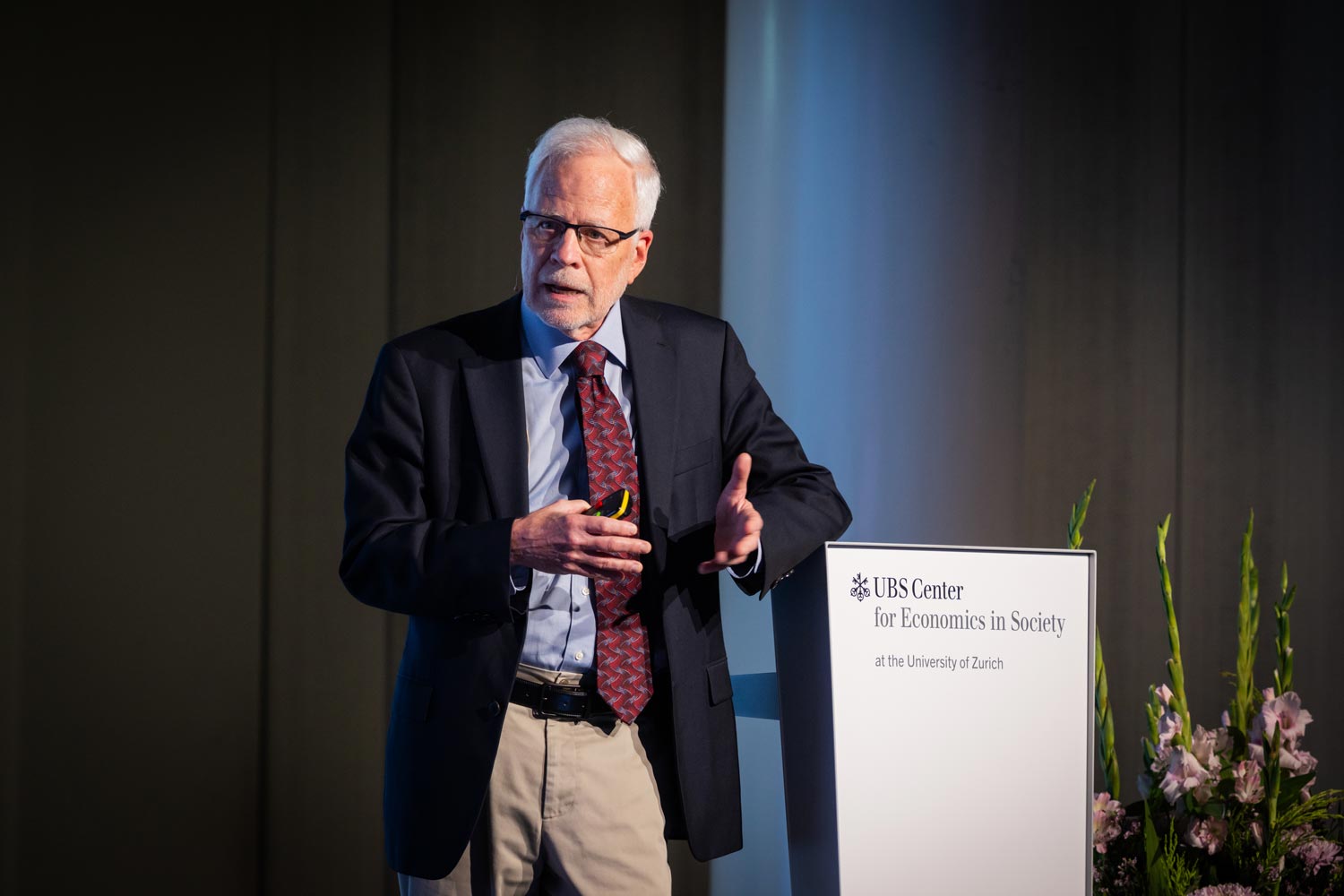
Wie lange noch bleibt der Dollar die Weltwährung? SRF Echo der Zeit vom 11.11.2025 mit Barry Eichengreen
«Die aktuelle Entwicklung erinnert an die Internetblase und an die Finanzkrise» NZZ Interview mit Raghuram Rajan vom 21.11.2025
«Wir stehen am Beginn einer neuen globalen Finanzordnung» Tages-Anzeiger Interview vom 23.11.2025 mit Hélène Rey