

Oxytocin selectively boosts trust
Sep 2026
Jump directly to
Jump directly to
The following media release was originally published by UZH News on 12.8.2026. Edited for context purposes by the UBS Center.
In 2005, a research team led by University of Zurich economics professor Ernst Fehr published a study in the science journal Nature that provided evidence for the first time that intranasally administered oxytocin can increase trusting behavior in humans. Oxytocin is a hormone and neurotransmitter produced naturally in the body that influences social interactions, among other things.
Further studies conducted in subsequent years did not deliver a uniform picture, however. While some corroborated the finding, others did not detect a general effect. At the same time, it was criticized that many investigations were based on small sample sizes, hypothesizing took place after the results were already known, and the studies were methodologically difficult to compare with each other. It thus remained unclear whether and under what conditions oxytocin really does increase trust.
For the new study, an international research team consisting of Ernst Fehr (University of Zurich), Bodo Vogt and Paul Bengart (Otto von Guericke University Magdeburg) and Carolyn Declerck (University of Antwerp) recruited 359 men who were rated as having a low disposition to trust on the basis of a preliminary questionnaire. The researchers deliberately confined the study to men so that they would be able to compare the results with the findings of previous oxytocin studies. The study subjects randomly received either oxytocin or a placebo. Afterwards, they participated in a trust game under strict anonymity conditions, in which they were asked to decide how much money they wanted to entrust to an unknown person.
Men with a low disposition to trust who received oxytocin entrusted an average of around 15% more money to their counterpart than the low-trusting men in the placebo group did. Afterwards, the researchers combined the data with the results of a comparable earlier study. The pooled analysis of a total of 578 men with a low disposition to trust revealed an almost 17% increase in trusting behavior. The effect persisted even after the researchers controlled for different personality traits.
The study thus corroborates a finding that had already become apparent in an earlier investigation, but now does so for the first time with a predefined hypothesis tested with a much larger sample size. “After more than 20 years, we have now succeeded in providing robust evidence of a selective effect of oxytocin,” Fehr says.
At the same time, the findings argue against the supposition that oxytocin basically makes all people more trustful. The study instead shows that the hormone selectively increases trusting behavior in men with a low disposition to trust. Within this group, the degree of disposition to trust didn’t matter: the effect on men with particularly low trust disposition scores was not stronger than it was on men with somewhat higher scores that were nonetheless still rated as low.
Why oxytocin exerts this specific effect remains an unanswered question. The study did not directly investigate underlying biological mechanisms. “It’s possible that the hormone intensifies the expectation that others will cooperate,” Fehr says. Oxytocin may also reduce the fear of being cheated by others, he adds. Future studies are to more closely investigate these mechanisms and shed light on whether the findings also apply to women.
The researchers employed a trust game involving two roles: that of an investor and that of a trustee. Both investor and trustee received an endowment of 12 euros at the start of the game. In the role of investor, subjects chose whether they wanted to entrust 0, 4, 8 or 12 euros to an unknown person. The amount transferred was tripled. Afterwards the other person could send any amount of his choice back to the investor. The more money the investor transferred, the more trust he had that his counterpart would act fairly.
The following media release was originally published by UZH News on 12.8.2026. Edited for context purposes by the UBS Center.
In 2005, a research team led by University of Zurich economics professor Ernst Fehr published a study in the science journal Nature that provided evidence for the first time that intranasally administered oxytocin can increase trusting behavior in humans. Oxytocin is a hormone and neurotransmitter produced naturally in the body that influences social interactions, among other things.


Bodo Vogt, Paul Bengart, Carolyn Declerck, Ernst Fehr. Oxytocin increases trust in men low in dispositional trust. PNAS. August 11, 2026.
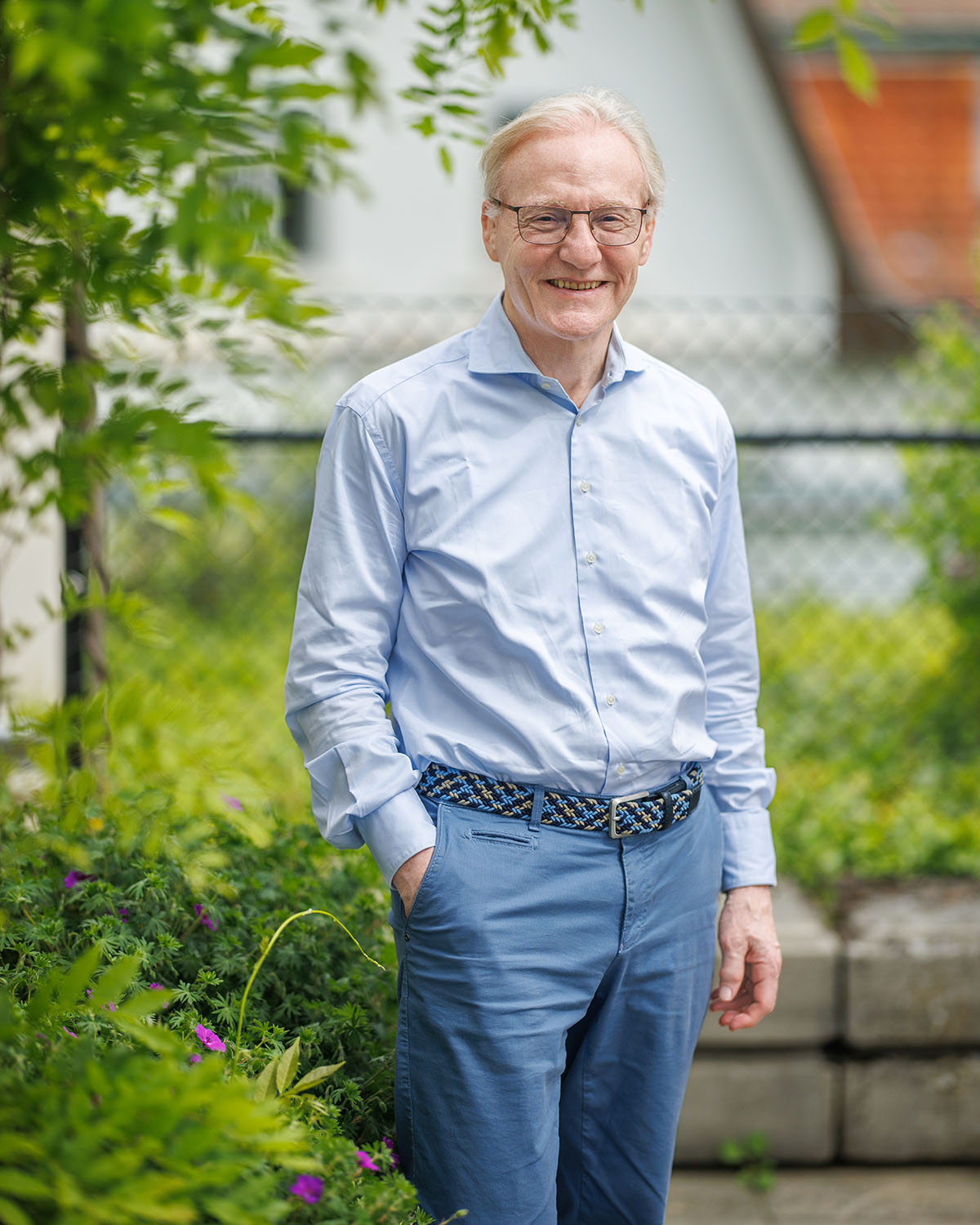
Ernst Fehr received his doctorate from the University of Vienna in 1986. His work has shown how social motives shape the cooperation, negotiations and coordination among actors and how this affects the functioning of incentives, markets and organisations. His work identifies important conditions under which cooperation flourishes and breaks down. The work on the psychological foundations of incentives informs us about the merits and the limits of financial incentives for the compensation of employees. In other work he has shown the importance of corporate culture for the performance of firms. In more recent work he shows how social motives affect how people vote on issues related to the redistribution of incomes and how differences in people’s intrinsic patience is related to wealth inequality. His work has found large resonance inside and outside academia with more than 100’000 Google Scholar citations and his work has been mentioned many times in international and national newspapers.
Ernst Fehr received his doctorate from the University of Vienna in 1986. His work has shown how social motives shape the cooperation, negotiations and coordination among actors and how this affects the functioning of incentives, markets and organisations. His work identifies important conditions under which cooperation flourishes and breaks down. The work on the psychological foundations of incentives informs us about the merits and the limits of financial incentives for the compensation of employees. In other work he has shown the importance of corporate culture for the performance of firms. In more recent work he shows how social motives affect how people vote on issues related to the redistribution of incomes and how differences in people’s intrinsic patience is related to wealth inequality. His work has found large resonance inside and outside academia with more than 100’000 Google Scholar citations and his work has been mentioned many times in international and national newspapers.