

How can foundations increase their impact?
Aug 2026
Jump directly to
Jump directly to
Guest contribution by Dina Pomeranz and Deborah Kistler
A quiet revolution has taken place in impact measurement in recent years, driven by two complementary developments. First, in the age of big data, collecting and processing data has become far easier. Second, the methods for analyzing the impact of specific projects and reforms have improved markedly, in large part through the introduction of randomized field studies.
It was for this experimental, evidence-based approach to alleviating global poverty that the 2019 Nobel Prize in Economic Sciences was awarded. The winners Abhijit Banerjee, Esther Duflo and Michael Kremer revolutionized the impact measurement of development projects by using randomized field studies to test the effectiveness of specific measures. The key is understanding what development would have taken place without the project. To measure this, participants are randomly assigned either to the project or to a control group — similar to medical research. This allows to measure the true impact by comparing the situation of the project group with that of the control group. In addition, these methods can show the impact achieved relative to the costs, making it possible to optimize the cost-effectiveness of projects.
In addition to randomized field studies, there are also other, so-called quasi-experimental methods that make it possible to measure impact in a reliable way. A growing number of non-profit organizations and funding institutions now draw on such studies in their work: not only for accountability but above all to inform their strategic decisions. The Zurich Center for Economic Development at the University of Zurich was founded to do exactly this: partner with various actors to support them in evaluating what works, and how well.
For non-profit organizations and foundations, on the one hand it helps to understand whether a project has any impact. On the other hand, it is also essential to understand how a project should best be implemented so that its impact is maximized.
Population Services International (PSI), which works in the field of malaria prevention, offers an illustrative example. The organization distributes mosquito nets that protect against malaria. For a long time, the prevailing assumption was that recipients should make their own contribution toward the cost. Only then, it was thought, would the nets be valued, used correctly, and reach those who needed them most.
Later, however, PSI learned from a randomized field study from Kenya that the opposite was the case. Free distribution increased impact substantially: more than twice as many people accepted a net, and they used it just as consistently as households that had paid. Nor did recipients grow accustomed to “free handouts” as had been feared but instead grew accustomed to the usefulness of the nets. Based on these findings, PSI was able to optimize its approach and today usually provides mosquito nets free of charge to vulnerable population groups. The research from Kenya influenced not just PSI's practice but the entire sector: the World Health Organization (WHO) now recommends free distribution as well. And a study in the journal “Nature” was able to show that these nets have prevented around ten million malaria deaths.
Examples like this make two points. First, the importance of checking one’s own assumptions and ideas with data, and to making decisions grounded in empirical evidence. Second, not every organization has to conduct its own impact studies but can benefit from the research of others. Reliable studies now exist across a wide range of topics, produced by other organizations or researchers, and they can guide both the design of individual projects and the strategic choice of new initiatives.
These new methods of impact measurement have demonstrated clearly, in recent years, that development cooperation produces substantial and measurable results across a wide range of fields, and contributes significantly to reducing poverty.
A few examples: In the health sector, measures such as vaccinations, malaria prevention or improved access to basic health care can greatly reduce child and maternal mortality. In education, school meals, deworming pills and scholarships increase school attendance rates and thereby future income. Investments in infrastructure, such as in clean water, roads or bridges, also raise incomes, and improve access to markets, health and schooling.
Many donor countries, including Switzerland, have sharply reduced government funding for development cooperation in recent years. In the United States, the entire development agency, USAID, was dissolved outright in January 2025.
The consequences are severe. The UN and research institutions such as the Center for Global Development estimate that these cuts will cost hundreds of thousands of lives each year.
Beyond the immediate humanitarian consequences, such cuts are also problematic from an efficiency perspective. The abrupt termination of ongoing programs destroys structures that were built over many years and cannot be easily rebuilt: valuable know-how, deep local and global networks and, often, the trust of the local communities is lost for good.
As public development cooperation has been cut back, the work of foundations has grown in importance. For them, the cuts affect them in two ways. On one hand, the need for additional, flexibly deployable funds is increasing in areas where state funding is disappearing. On the other hand, the cuts in public development aid from Switzerland also directly harm the work of foundations that are active on the ground.
For this reason, sixteen Swiss foundations⁸³ recently published a joint statement⁸⁴ in which they oppose cuts to public development cooperation.
As internationally active foundations, they express serious concern about the planned further cuts to Swiss budgets for international cooperation. In the current global climate, they argue, development cooperation is a sustainable and preventive security strategy. The work of foundations complements that of the governments, for example through mutually reinforcing projects, co-financing and the building of sustainable local partnerships.
However, foundations cannot fill the gap left by government cuts, since only state-led international cooperation can effectively address systemic causes. In their statement, the foundations stress that the agreed-upon cuts have already led to tangible negative effects: programs have had to close, weakening economic resilience, equality, climate protection and stability while increasing migration and insecurity. The cuts have also jeopardized the international Geneva, the pillar of Switzerland's economic and foreign policy.
The Swiss electorate, too, opposes further cuts to development aid by a wide margin. Representative surveys clearly show⁸⁵ that even in the current political climate, a majority still supports higher spending on development cooperation, while fewer than 20% favor additional cuts.
Overall, the new methods in impact evaluation offer remarkable opportunities for the work of foundations working in poverty reduction and development cooperation. Against a backdrop of discouraging headlines about geopolitical upheaval and shrinking development budgets, these tools for innovation and greater efficiency in the non-profit sector give real grounds for hope.
Guest contribution by Dina Pomeranz and Deborah Kistler
A quiet revolution has taken place in impact measurement in recent years, driven by two complementary developments. First, in the age of big data, collecting and processing data has become far easier. Second, the methods for analyzing the impact of specific projects and reforms have improved markedly, in large part through the introduction of randomized field studies.
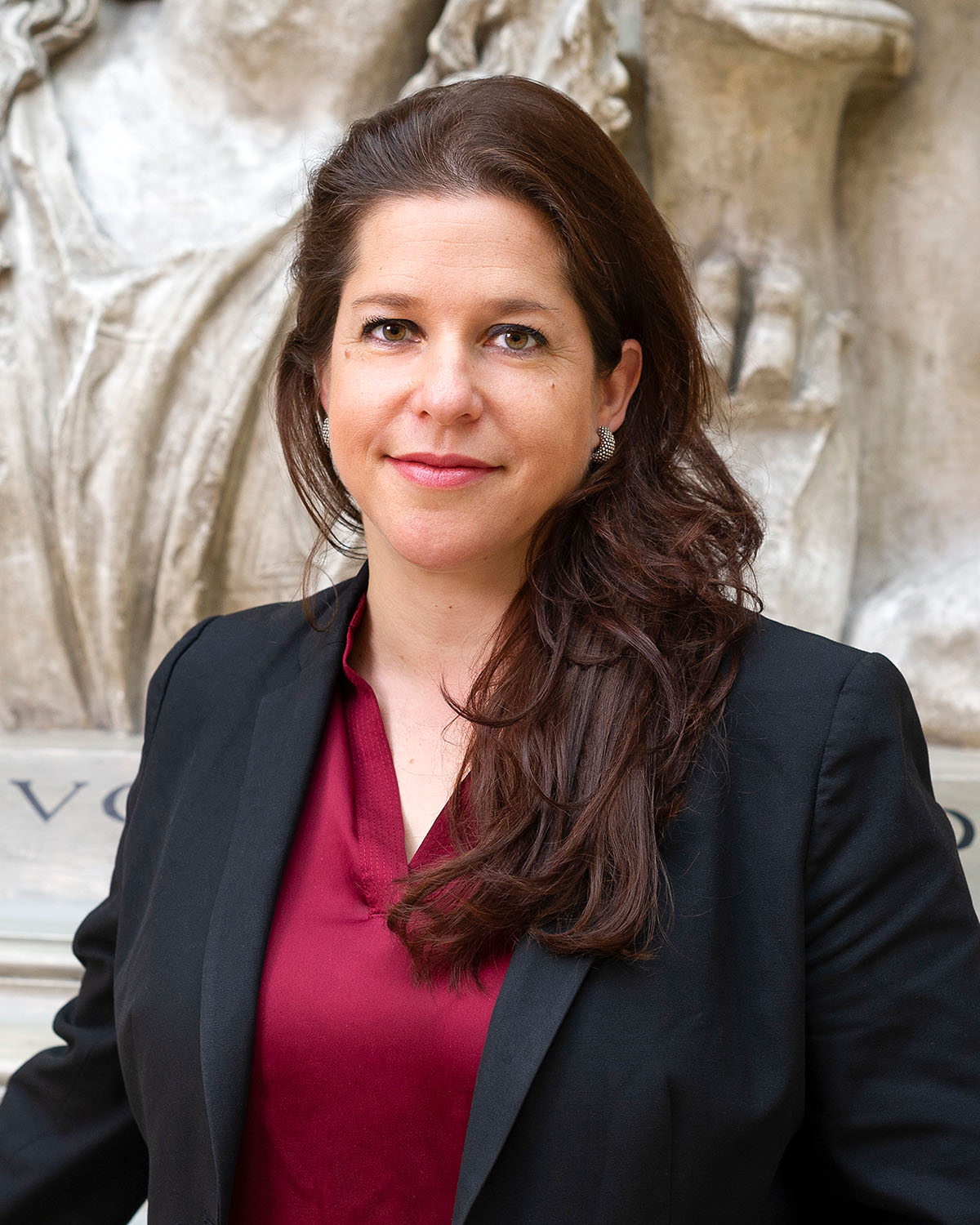


Dina Pomeranz received her PhD from Harvard in 2010. Prior to joining the University of Zurich, she was an assistant professor at Harvard Business School and a Post-Doctoral Fellow at MIT's Poverty Action Lab. Her research focuses on developing countries, in particular on public finance, taxation, public procurement and firm development. Taking state-capacity research to the field, she works closely with the governments in Chile, Ecuador and Kenya to analyze strategies to strengthen public finance capabilities, and measure the impacts on government agencies, citizens and firms. Her work has been published in academic journals including the American Economic Review, the American Economic Journal - Applied Economics, and the Journal of Economic Development. In 2017, she was awarded one of the highly competitive ERC Starting Grants for her research on tax evasion and the role of firm networks. In 2018, she received the Excellence Prize in Applied Development Research of the “Verein für Socialpolitik”, was named as one of the top 10 most influential economists in Switzerland by a consortium of Swiss newspapers and was elected to the Council of the European Economic Association for a 5-year term.
Deborah Kistler is a behavioural economist and the Managing Director of the Zurich Center for Economic Development (CED) at the University of Zurich since 2025. She has already led various studies for impact measurement in Switzerland and South America. Prior to CED, Kistler worked as an associate for Policy Analytics, which was founded in 2017 and is an ETH Zurich spin-off. She studied at the Universities of Lausanne and Zurich. Previously, she worked as a consultant for Fehr Advice and for the research and consulting company Econcept.
Dina Pomeranz received her PhD from Harvard in 2010. Prior to joining the University of Zurich, she was an assistant professor at Harvard Business School and a Post-Doctoral Fellow at MIT's Poverty Action Lab. Her research focuses on developing countries, in particular on public finance, taxation, public procurement and firm development. Taking state-capacity research to the field, she works closely with the governments in Chile, Ecuador and Kenya to analyze strategies to strengthen public finance capabilities, and measure the impacts on government agencies, citizens and firms. Her work has been published in academic journals including the American Economic Review, the American Economic Journal - Applied Economics, and the Journal of Economic Development. In 2017, she was awarded one of the highly competitive ERC Starting Grants for her research on tax evasion and the role of firm networks. In 2018, she received the Excellence Prize in Applied Development Research of the “Verein für Socialpolitik”, was named as one of the top 10 most influential economists in Switzerland by a consortium of Swiss newspapers and was elected to the Council of the European Economic Association for a 5-year term.
Deborah Kistler is a behavioural economist and the Managing Director of the Zurich Center for Economic Development (CED) at the University of Zurich since 2025. She has already led various studies for impact measurement in Switzerland and South America. Prior to CED, Kistler worked as an associate for Policy Analytics, which was founded in 2017 and is an ETH Zurich spin-off. She studied at the Universities of Lausanne and Zurich. Previously, she worked as a consultant for Fehr Advice and for the research and consulting company Econcept.