
Spotlight
Jan 2026
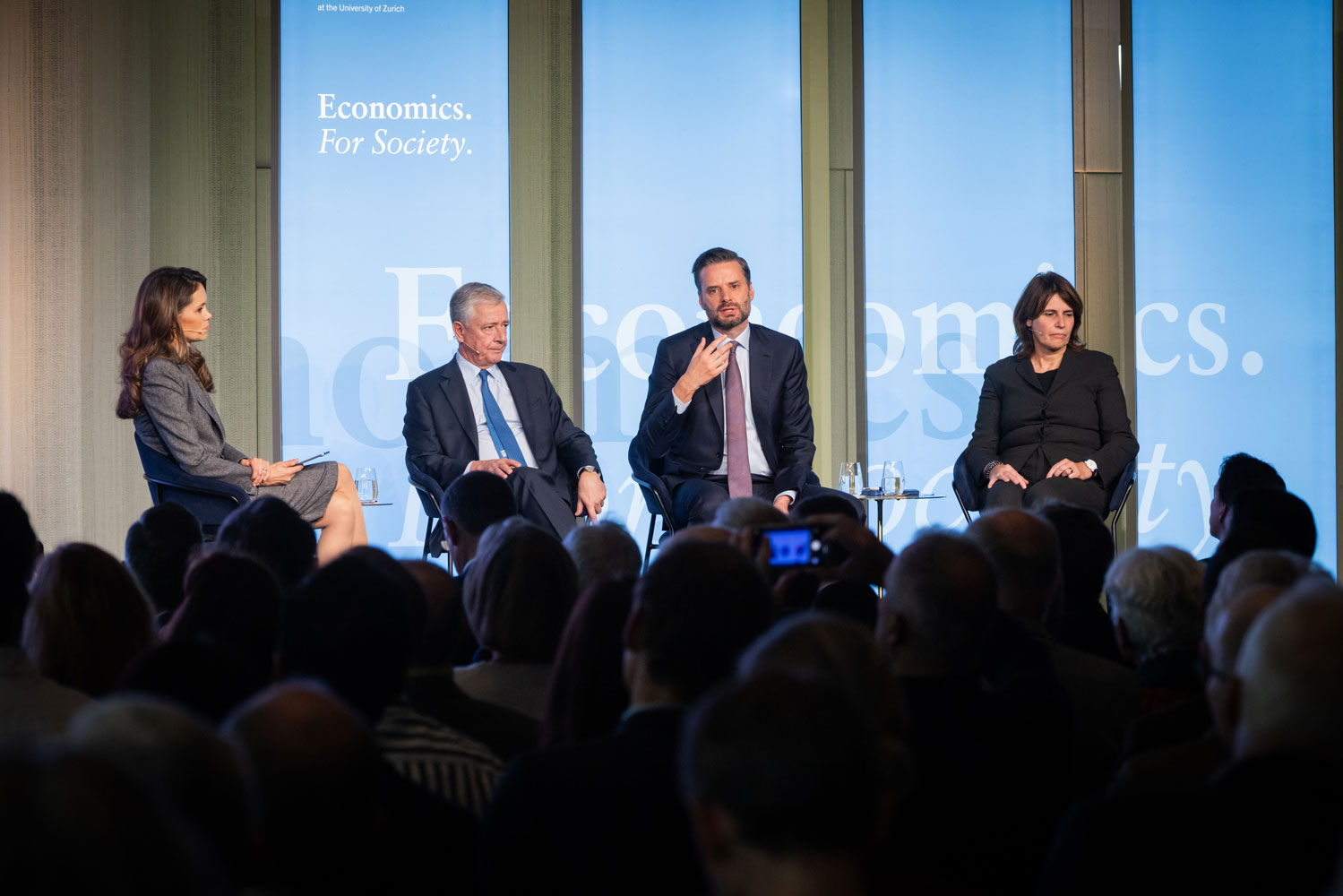
These insights emerged when prominent economists, policymakers, and business leaders came to Zurich in 2025 at the invitation of the UBS Center. Speaking at the Wirtschaftspodium Schweiz in spring and the Forum for Economic Dialogue in fall, they offered complementary perspectives on the forces reshaping trade and on the choices facing Switzerland, Europe, and the global economy.
At the Forum for Economic Dialogue, former WTO Chief Economist Ralph Ossa cautioned against declaring the rules-based system dead, noting that “72% of world trade is still conducted under WTO rules” and that the global reach of U. S. tariff hikes remains limited, as the U. S. accounts for only a small share of world imports. CEPR Vice President Hélène Rey added that trade and financial networks have become more tripolar and more reactive to geopolitical shocks, with firms already reconfiguring supply chains and markets showing high sensitivity to tariff news.
Prof. Ralph Ossa, UBS Foundation Professor at the University of Zurich and former WTO Chief Economist
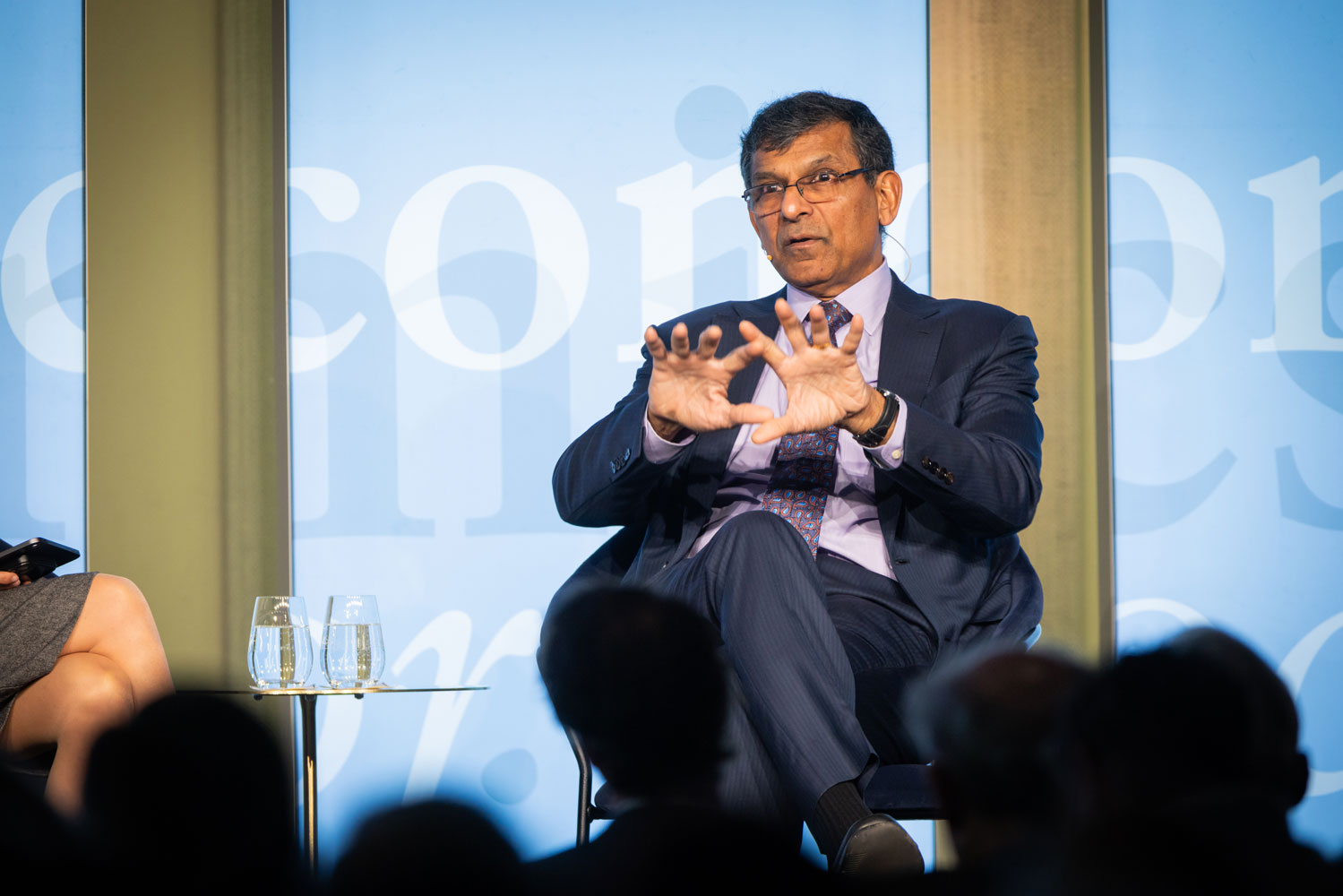
This heightened uncertainty also framed the debate on monetary power. As world-leading expert on global monetary systems Barry Eichengreen argued, “the fate of the dollar depends on the rule of law,” with the currency’s future shaped less by economics than by political institutions and trust. Former governor of the Reserve Bank of India Raghuram G. Rajan underscored that these pressures interact with domestic vulnerabilities, warning that the weakening of the rules-based order reflects not only geopolitical tensions but also policy failures and political polarization at home.
Prof. Raghuram G. Rajan, former governor of the Reserve Bank of India, Professor of Finance (Chicago Booth)
Despite clear risks, such as trade diversion, discriminatory deals, and technology controls, several speakers highlighted opportunities at the Wirtschaftspodium Schweiz. Europe could strengthen its geopolitical weight by completing the Capital Markets Union. Switzerland retains strong institutions, stability, innovation capacity, and an economic model built on openness.
Albert Rösti, Federal Councilor
“Switzerland is rich, but it does not have to stay that way,” warned Federal Councilor Albert Rösti, pointing to the institutional foundations that enabled the country’s long-term success. These strengths, he argued, are under pressure from rising regulation and external shocks. “We did not expect what has now happened,” added State Secretary Helene Budliger Artieda, referring to the abrupt U. S. tariff announcements in April 2025. Her verdict: resilience requires diversification, anchoring ties with the EU, keeping channels to the U. S. open, and engaging China where feasible.
Taken together, the voices that gathered in Zurich offered a coherent picture: globalization is not ending, but changing shape. For Switzerland and Europe, the task is to remain open, agile, and anchored in the institutional strengths that have long supported their prosperity.
These insights emerged when prominent economists, policymakers, and business leaders came to Zurich in 2025 at the invitation of the UBS Center. Speaking at the Wirtschaftspodium Schweiz in spring and the Forum for Economic Dialogue in fall, they offered complementary perspectives on the forces reshaping trade and on the choices facing Switzerland, Europe, and the global economy.
At the Forum for Economic Dialogue, former WTO Chief Economist Ralph Ossa cautioned against declaring the rules-based system dead, noting that “72% of world trade is still conducted under WTO rules” and that the global reach of U. S. tariff hikes remains limited, as the U. S. accounts for only a small share of world imports. CEPR Vice President Hélène Rey added that trade and financial networks have become more tripolar and more reactive to geopolitical shocks, with firms already reconfiguring supply chains and markets showing high sensitivity to tariff news.

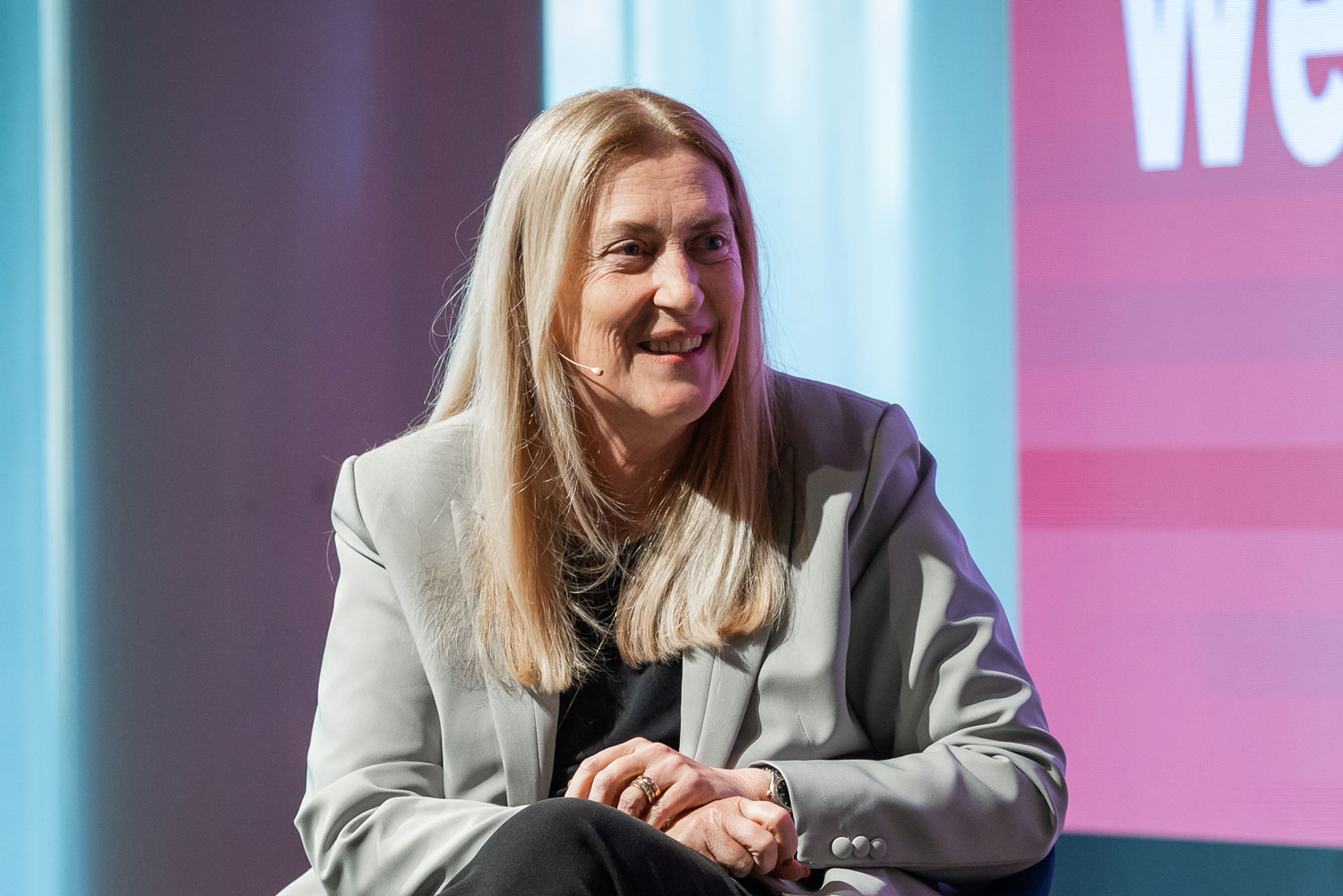
In 2025, the UBS Center and the Department of Economics had the privilege of hosting two of the 2024 Nobel laureates in Economic Sciences – Daron Acemoğlu and James A. Robinson – whose joint work has profoundly shaped how we understand the forces that build or break societies.
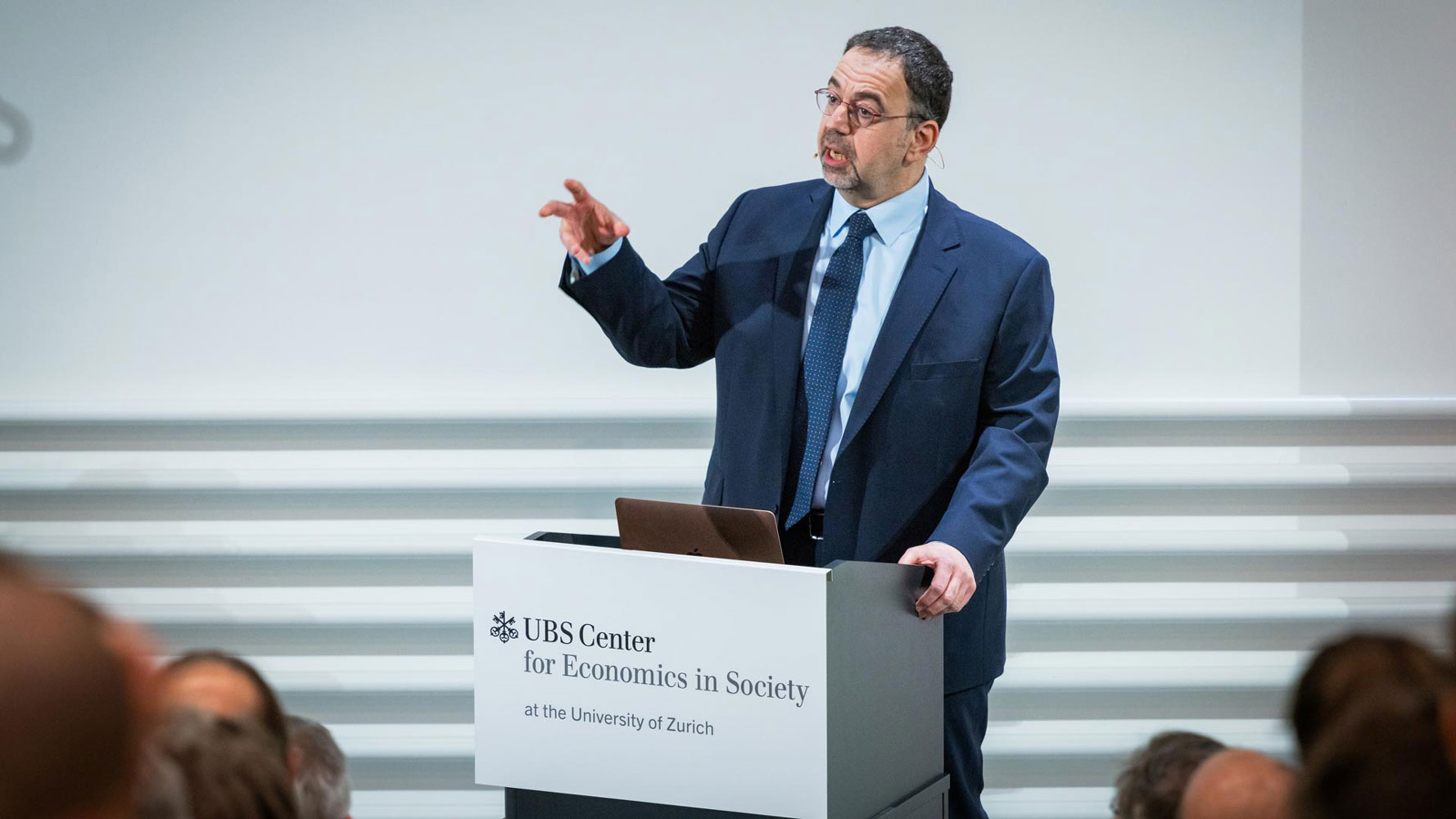
In his talk at UZH in January, Daron Acemoğlu explored one of today’s most pressing questions: Who benefits from technological progress? Drawing on his book Power and Progress, he argued that innovation is never neutral. While artificial intelligence promises vast productivity gains, its current trajectory risks amplifying inequality if left in the hands of a few. “Whoever controls Artificial General Intelligence controls the world,” he warned. For Acemoğlu, the key challenge is political, not technical: societies must steer AI toward empowering workers and expanding shared prosperity, rather than concentrating power in the hands of elites.
James A. Robinson, in conversation with UBS Foundation Associate Professor Lorenzo Casaburi, took a similarly critical look at how institutions shape the distribution of power. Revisiting Africa’s political heritage, he challenged the narrative of “failed states,” highlighting the continent’s long tradition of participatory governance. “Africans weren’t failing to build states, they were succeeding in building societies that valued autonomy,” he noted. Through systems of local councils and collective land ownership, many African communities intentionally decentralized authority to sustain cooperation and prevent domination.
Taken together, Acemoğlu and Robinson remind us that progress, whether technological or institutional, is never automatic. It depends on who holds power and how it is used.
In 2025, the UBS Center and the Department of Economics had the privilege of hosting two of the 2024 Nobel laureates in Economic Sciences – Daron Acemoğlu and James A. Robinson – whose joint work has profoundly shaped how we understand the forces that build or break societies.
In his talk at UZH in January, Daron Acemoğlu explored one of today’s most pressing questions: Who benefits from technological progress? Drawing on his book Power and Progress, he argued that innovation is never neutral. While artificial intelligence promises vast productivity gains, its current trajectory risks amplifying inequality if left in the hands of a few. “Whoever controls Artificial General Intelligence controls the world,” he warned. For Acemoğlu, the key challenge is political, not technical: societies must steer AI toward empowering workers and expanding shared prosperity, rather than concentrating power in the hands of elites.

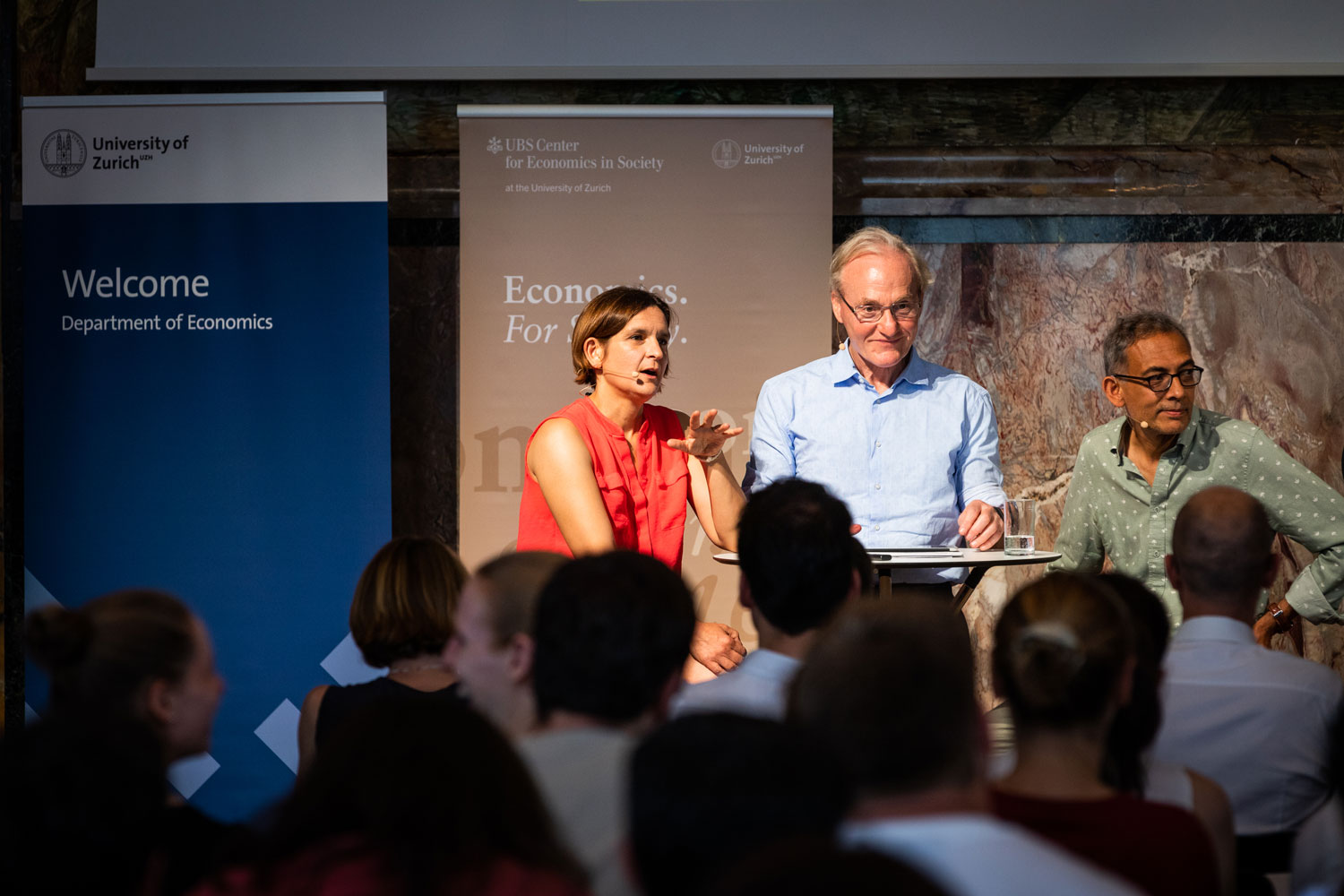
We are delighted that the Department of Economics has been able to attract two of the world’s most influential economists. Beginning in summer 2026, Nobel laureates Esther Duflo and Abhijit Banerjee will join the department as Lemann Foundation Professors of Economics.
The UBS Center is especially proud to call them familiar faces: both have long-standing ties to Zurich as members of the UBS Center Advisory Board and as repeat guests at the University of Zurich. Most recently, in June 2022, they delivered a public lecture on their book Good Economics for Hard Times, a memorable evening that drew a full audience and inspired reflection on how rigorous research can help address some of the world’s most pressing social and economic challenges.
Their arrival marks a milestone for Zurich’s position as a hub for excellence in economics. We look forward to welcoming Esther and Abhijit back to Zurich and to the momentum their presence will bring to Zurich’s standing as a leading center for research, innovation, and policy impact.
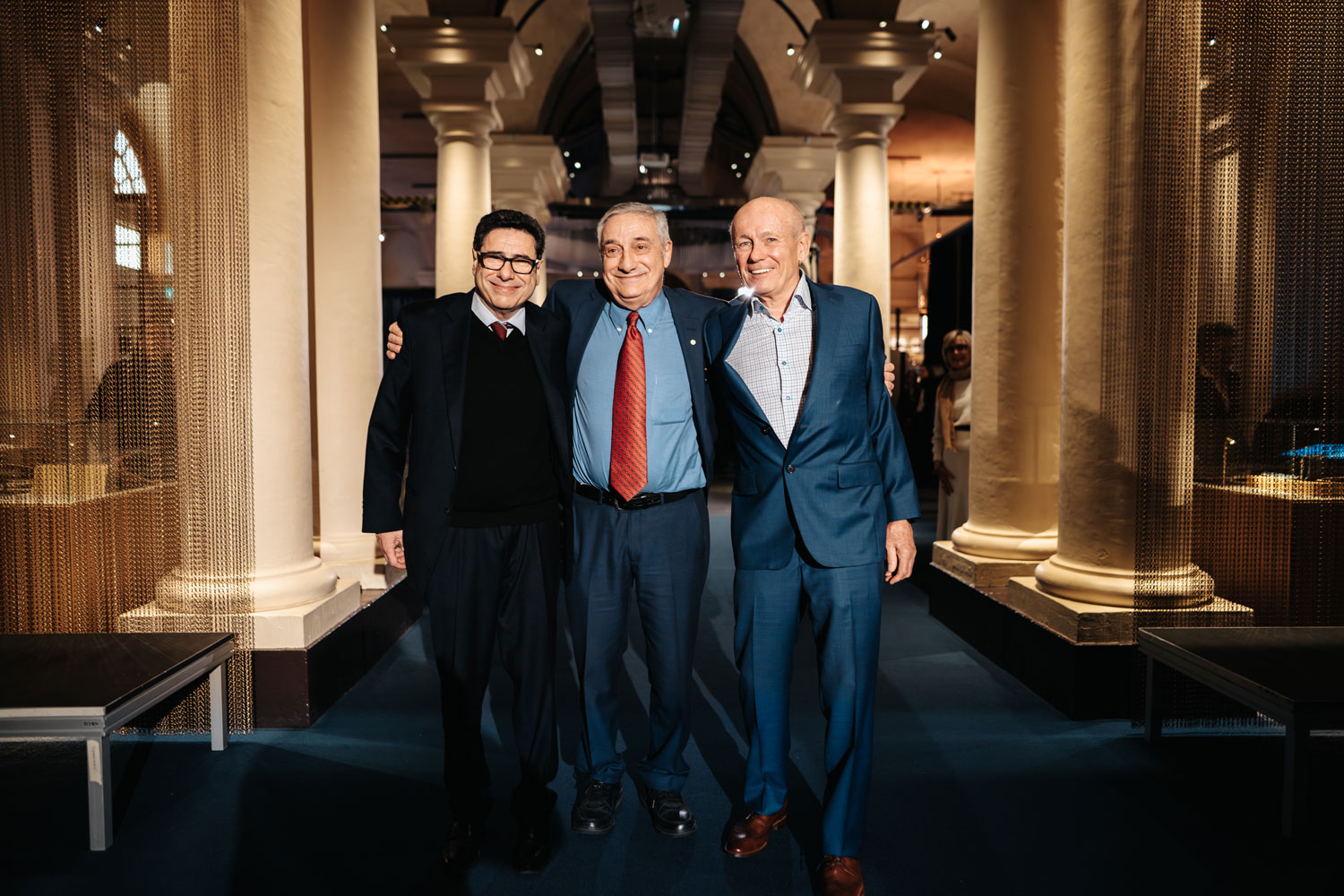
Esther Duflo and Abhijit Banerjee, Nobel laureates
We are delighted that the Department of Economics has been able to attract two of the world’s most influential economists. Beginning in summer 2026, Nobel laureates Esther Duflo and Abhijit Banerjee will join the department as Lemann Foundation Professors of Economics.
The UBS Center is especially proud to call them familiar faces: both have long-standing ties to Zurich as members of the UBS Center Advisory Board and as repeat guests at the University of Zurich. Most recently, in June 2022, they delivered a public lecture on their book Good Economics for Hard Times, a memorable evening that drew a full audience and inspired reflection on how rigorous research can help address some of the world’s most pressing social and economic challenges.
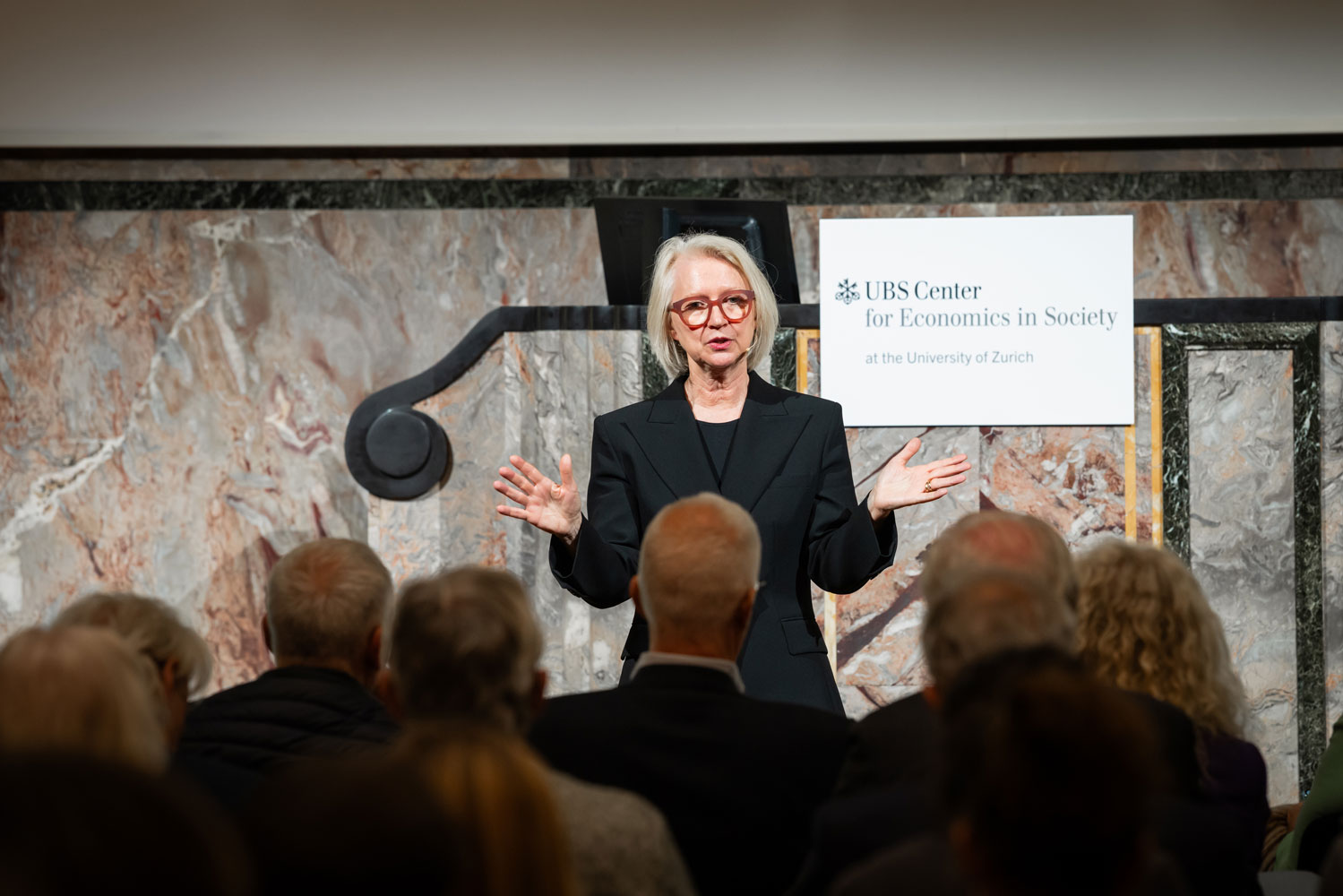
“We are in a crisis. I’m not sure everyone has realized that yet.” With this opening, Monika Schnitzer, Chair of the German Council of Economic Experts, set the tone for her lecture at the University of Zurich. She offered a candid diagnosis of Germany’s economic malaise – its weak growth, structural rigidities, and the urgent reforms needed to restore momentum. Yet her message was far from pessimistic. For Schnitzer, the crisis is not just a challenge but a catalyst, an opportunity for Germany to renew itself and emerge stronger.
“We are in a crisis. I’m not sure everyone has realized that yet.” With this opening, Monika Schnitzer, Chair of the German Council of Economic Experts, set the tone for her lecture at the University of Zurich. She offered a candid diagnosis of Germany’s economic malaise – its weak growth, structural rigidities, and the urgent reforms needed to restore momentum. Yet her message was far from pessimistic. For Schnitzer, the crisis is not just a challenge but a catalyst, an opportunity for Germany to renew itself and emerge stronger.
What do rising inequality, global trade tensions, climate change, and the impact of artificial intelligence on labor markets mean for our collective future? These are the fundamental questions economists are grappling with today. In a special edition of the UBS Center’s Public Paper series, dedicated to former Chairman of the Foundation Council Kaspar Villiger, all affiliated professors share their perspectives on these pressing challenges. Their contributions illustrate how cutting-edge research at the Department of Economics at the University of Zurich can help us gain a deeper understanding of these complex issues – and potentially find solutions to some of the most urgent problems of our time. In 2025, Kaspar Villiger has been appointed as Honorary President of the UBS Foundation of Economics in Society. This recognition honors his visionary leadership and his pivotal role in shaping the UBS Center. Under his guidance, the UBS Center has grown into a leading institution that fosters world-class economic research at the Department of Economics at the University of Zurich and facilitates dialogue between academia, business, politics, and society.
What do rising inequality, global trade tensions, climate change, and the impact of artificial intelligence on labor markets mean for our collective future? These are the fundamental questions economists are grappling with today. In a special edition of the UBS Center’s Public Paper series, dedicated to former Chairman of the Foundation Council Kaspar Villiger, all affiliated professors share their perspectives on these pressing challenges. Their contributions illustrate how cutting-edge research at the Department of Economics at the University of Zurich can help us gain a deeper understanding of these complex issues – and potentially find solutions to some of the most urgent problems of our time. In 2025, Kaspar Villiger has been appointed as Honorary President of the UBS Foundation of Economics in Society. This recognition honors his visionary leadership and his pivotal role in shaping the UBS Center. Under his guidance, the UBS Center has grown into a leading institution that fosters world-class economic research at the Department of Economics at the University of Zurich and facilitates dialogue between academia, business, politics, and society.
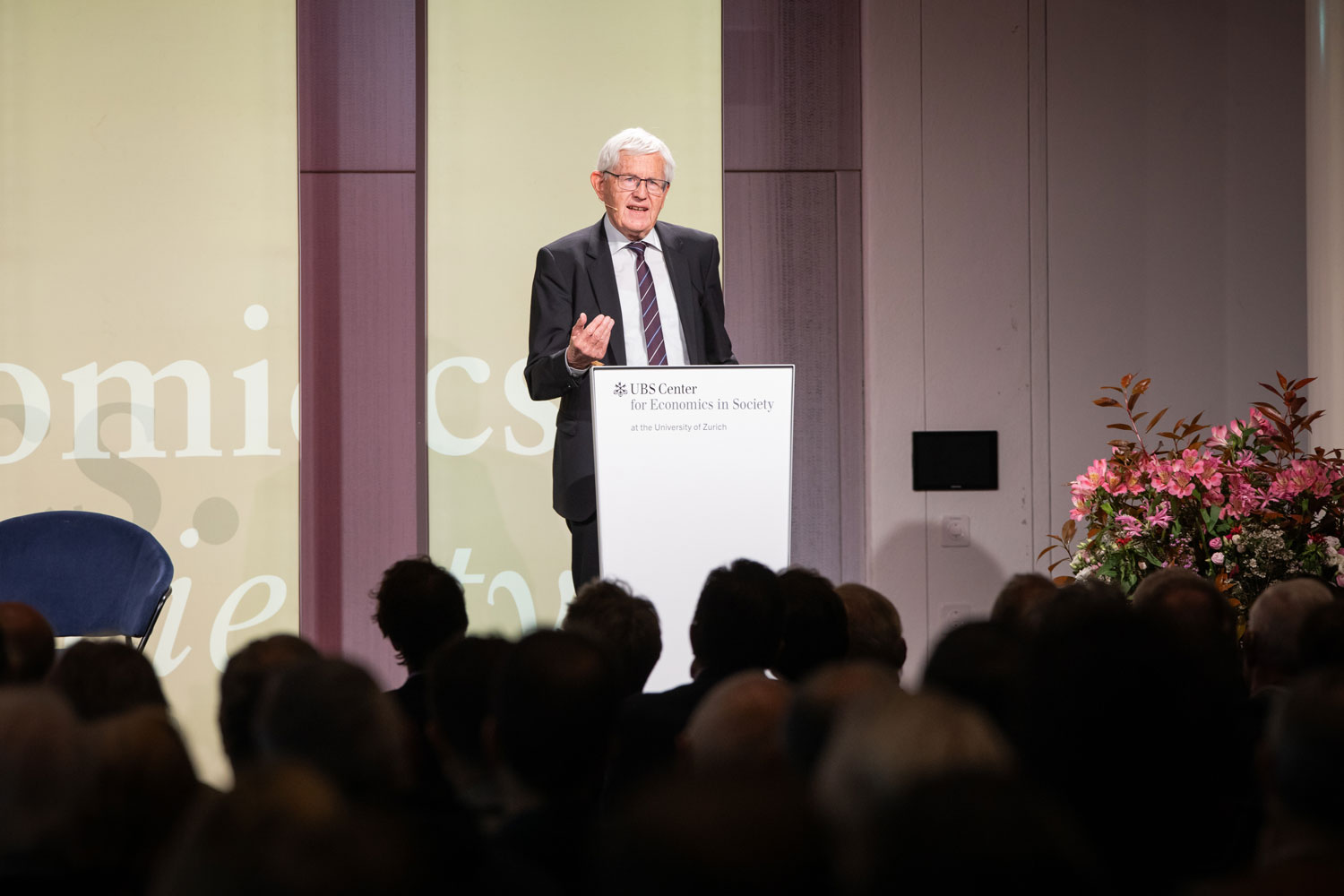
The UBS Center provides a platform for policy-relevant research, offering decision-makers rigorous and accessible insights on the forces shaping economies and societies. In one of our Economics of Global Challenges webcasts, Michael Peters (Yale University) explores how falling fertility rates affect long-run economic growth and what this means for future policy choices.
Michael Peters, Yale University
The UBS Center provides a platform for policy-relevant research, offering decision-makers rigorous and accessible insights on the forces shaping economies and societies. In one of our Economics of Global Challenges webcasts, Michael Peters (Yale University) explores how falling fertility rates affect long-run economic growth and what this means for future policy choices.
Michael Peters, Yale University
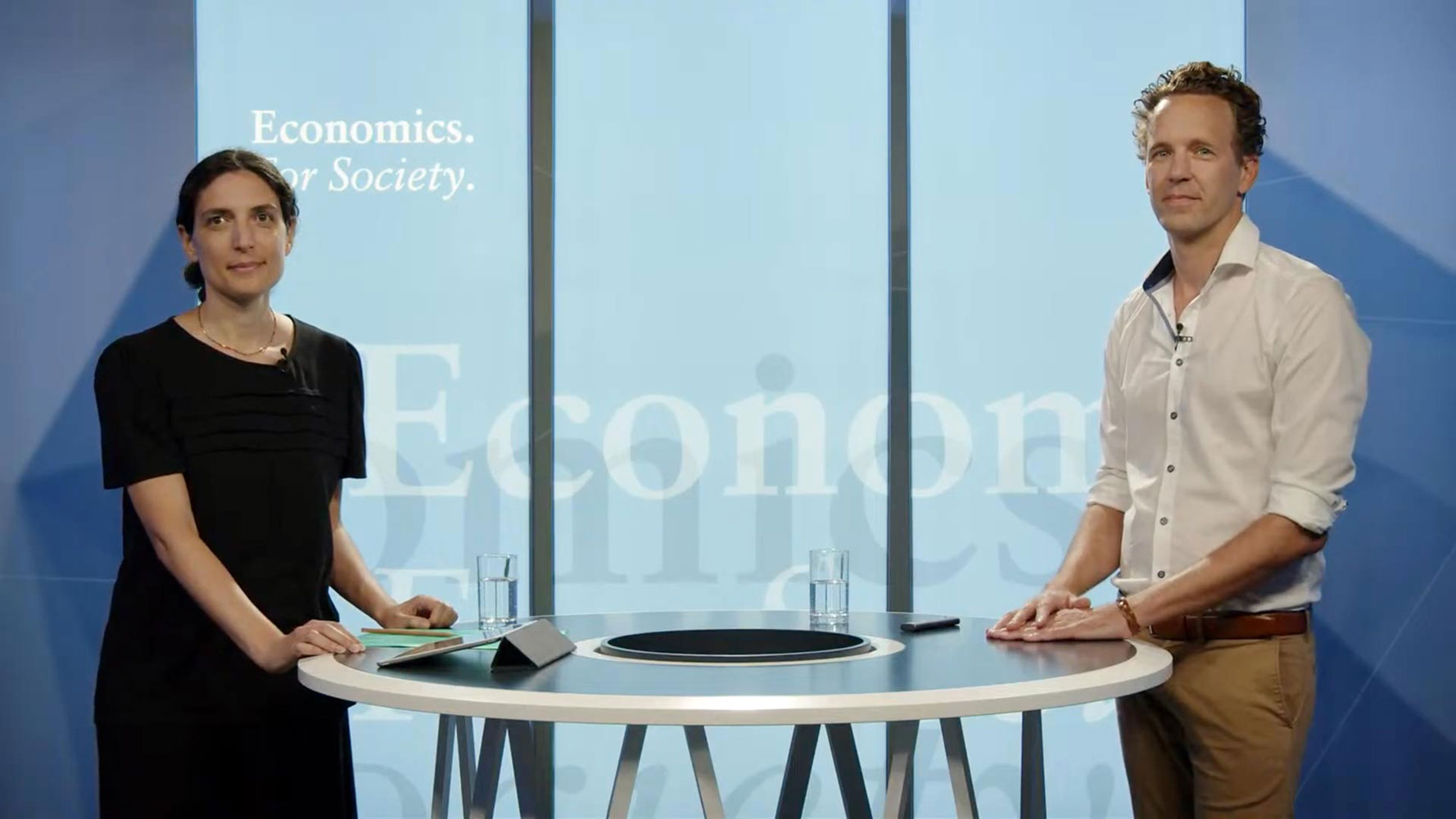
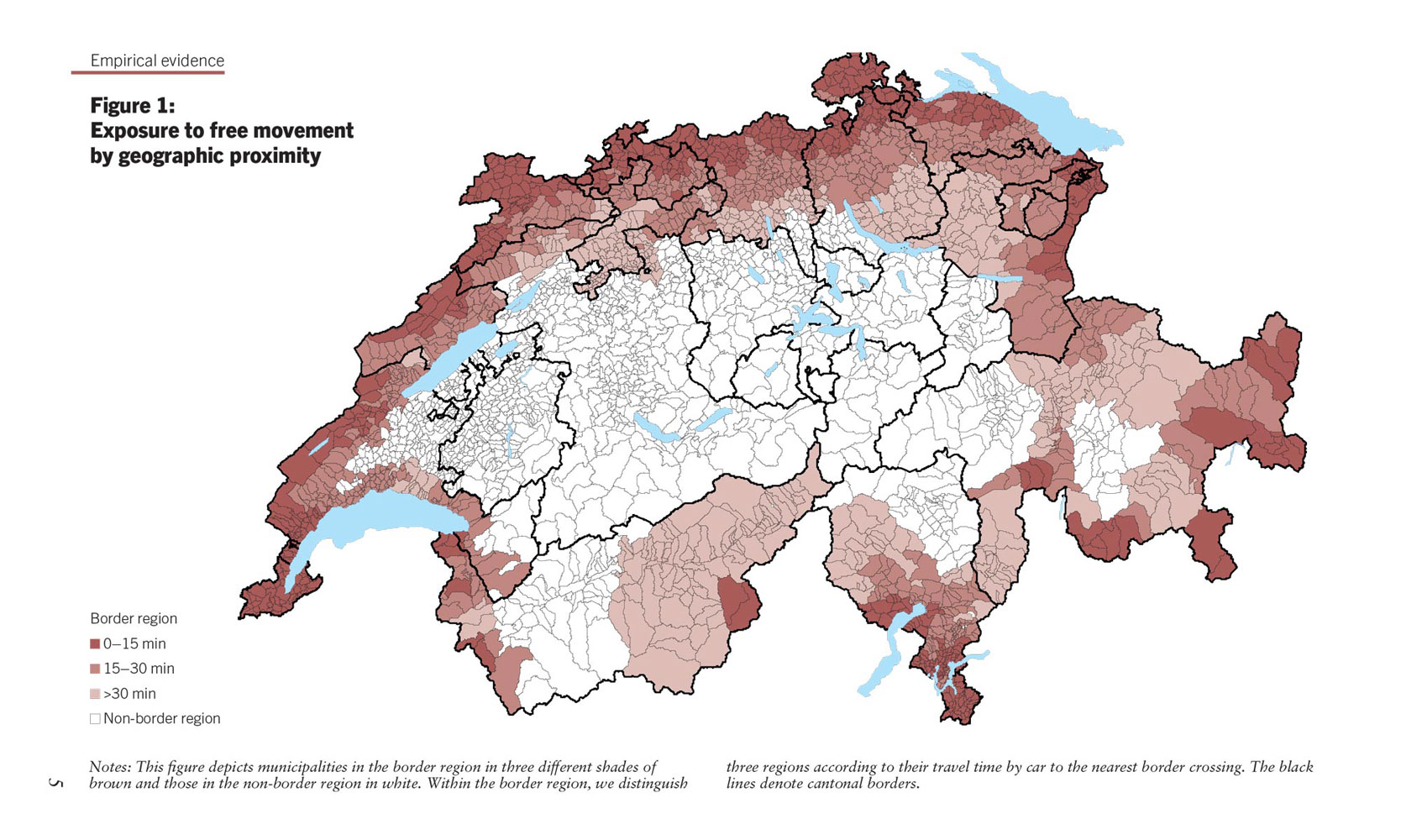
In a new issue of the UBS Center Policy Brief series, recent research by Andreas Beerli and colleagues reveals that liberalizing labor market access can lead to strong inflows of immigrants followed by firm growth and productivity gains – without negative effects on the labor market overall. However, they also highlight that such immigration flows may be accompanied by increased support for anti-immigration parties, driven more by political narratives than by direct economic or cultural threats. These findings underscore the importance of balancing economic openness with proactive investments into public infrastructure and housing, as well as informed public discourse.
In a new issue of the UBS Center Policy Brief series, recent research by Andreas Beerli and colleagues reveals that liberalizing labor market access can lead to strong inflows of immigrants followed by firm growth and productivity gains – without negative effects on the labor market overall. However, they also highlight that such immigration flows may be accompanied by increased support for anti-immigration parties, driven more by political narratives than by direct economic or cultural threats. These findings underscore the importance of balancing economic openness with proactive investments into public infrastructure and housing, as well as informed public discourse.
We warmly congratulate the newly awarded Nobel laureates Joel Mokyr, Philippe Aghion, and Peter Howitt. At the UBS Center, we are particularly proud: both Joel Mokyr and Philippe Aghion are long-standing members of our Advisory Board and have shared their research with Zurich audiences through UBS Center Opinions events. Their insights inspire colleagues such as Hans-Joachim Voth and David Hémous at the UBS Center and the department.
Prof. Joel Mokyr, newly awarded Nobel laureate and UBS Center Advisory Board Member
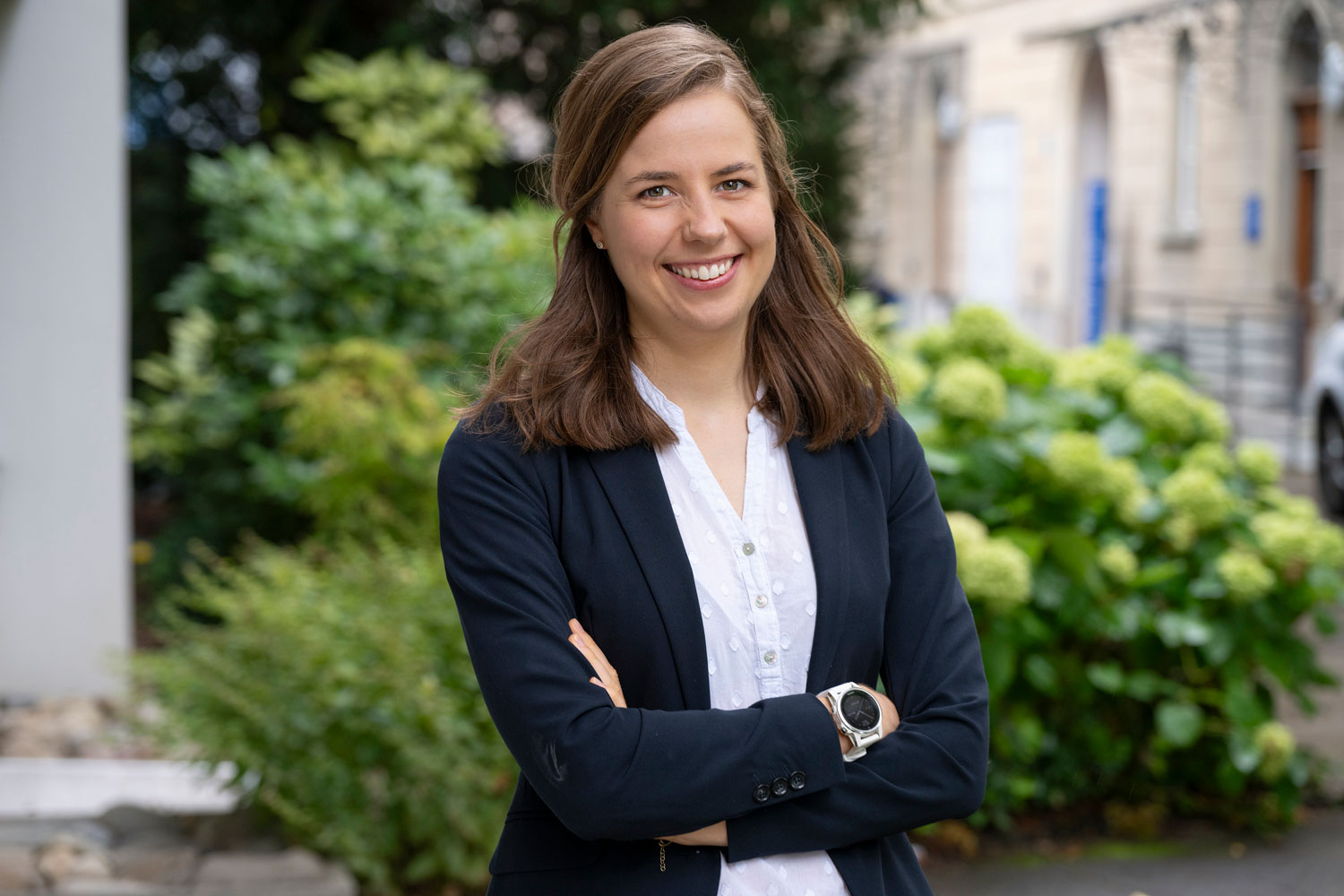
Ralph Ossa, who served as Chief Economist of the World Trade Organization (WTO) from January 2023 to June 2025, took up the UBS Foundation Professorship of Economics at the Department of Economics UZH on 1 July, 2025. Following two and a half years in Geneva, the internationally recognized economist has resumed his academic work.
We warmly congratulate our former UBS Center Scholarship Holder Lexi Schubert on receiving the prestigious Ronald Fisher Prize for the best junior (pre-tenure) paper. Lexi, currently a postdoctoral scholar at UC Berkeley, was honored for her paper “Self-Detrimental Avoidance of Rest.” Her findings suggest that people often misallocate their efforts between work and rest and could achieve greater overall well-being by allowing themselves more recovery time. This is especially relevant given the long-term costs of overwork, such as burnout. The award was presented at the Annual Conference of the Association of Field Experiments (AFE) at the University of Chicago.
We warmly congratulate the newly awarded Nobel laureates Joel Mokyr, Philippe Aghion, and Peter Howitt. At the UBS Center, we are particularly proud: both Joel Mokyr and Philippe Aghion are long-standing members of our Advisory Board and have shared their research with Zurich audiences through UBS Center Opinions events. Their insights inspire colleagues such as Hans-Joachim Voth and David Hémous at the UBS Center and the department.
Prof. Joel Mokyr, newly awarded Nobel laureate and UBS Center Advisory Board Member